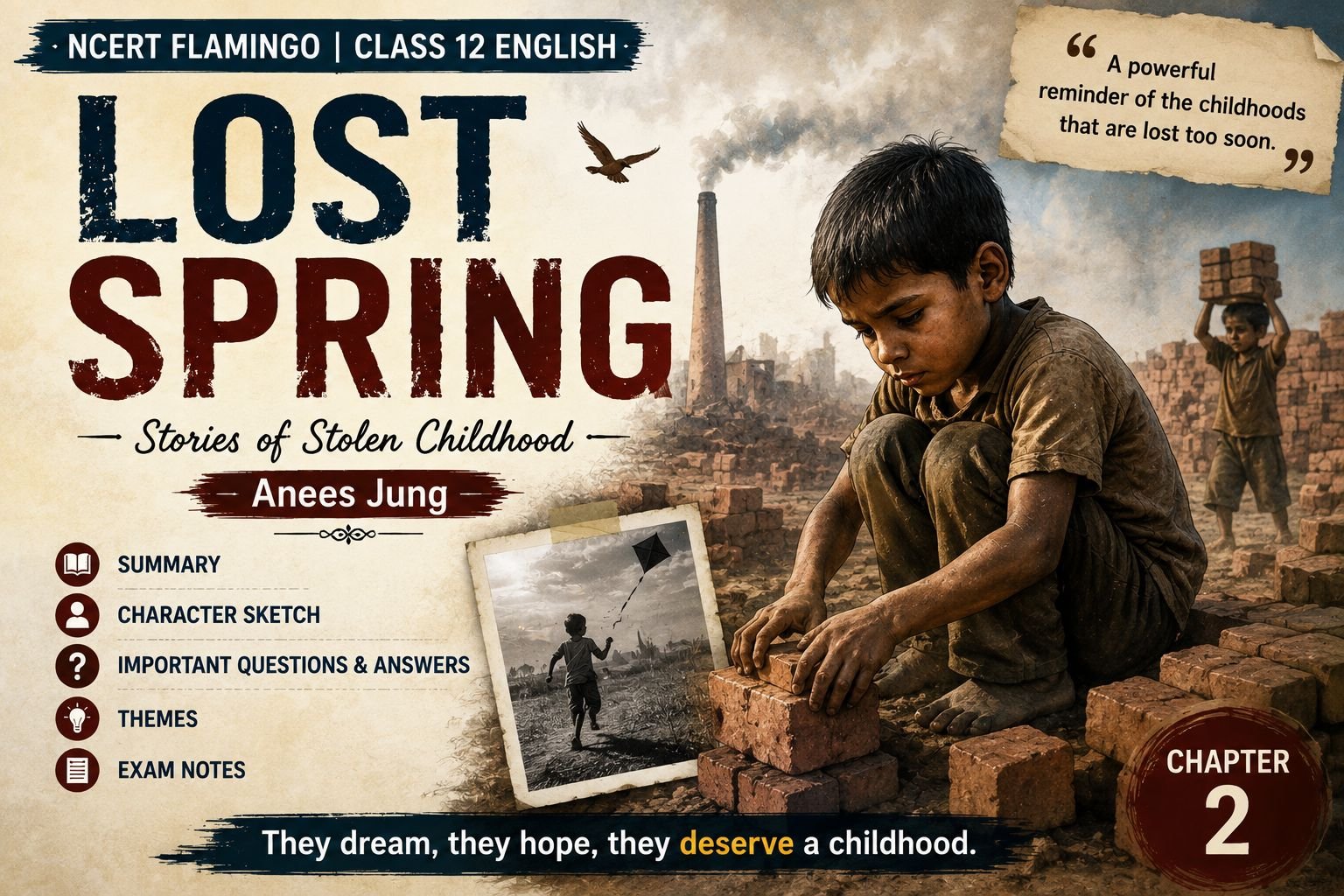
About the Author — Anees Jung
Lost Spring By Anees Jung … jab maine pehli baar unke baare mein padha, toh ek cheez ne sabse zyada impress kiya — yeh ek aisi aurat hai jisne sirf likhne ka kaam nahi kiya. Usne dekha. Suna. Mehsoos kiya. Aur phir likha.
She was born in Hyderabad, India, into a privileged, educated family. Her father was a well-known Urdu poet — so literature was literally in her blood. She grew up surrounded by books, poetry, and intellectual conversations. Padhe-likhe ghar mein, comfortable zindagi mein.
Par yahi uski sabse badi strength bani — woh jaanti thi ki duniya sirf aise nahi hoti. Isliye woh bahar nikalti rahi. Doosron ki zindagi mein jhaankti rahi.
She studied in Hyderabad and later in the United States — at the University of Michigan. Yeh ek badi baat thi us zamane mein — ek Indian woman going abroad for higher education. Par Anees Jung woh aurat thi jo boundaries todne mein believe karti thi.
Wapas aakar unhone journalism ki duniya mein kadam rakha. Aur yahan unka asli kaam shuru hua. Unhone India ke alag-alag corners mein jaake kaam kiya — gaon, jhuggiyan, factories, markets. Un logon se mili jinhe “mainstream” society ne kabhi seriously nahi liya.
Unki sabse famous book hai — “Unveiling India” — jisme unhone India ke alag-alag faces dikhaye. Phir aaya “Night of the New Moon” — Hyderabad ke last Nizam ki kahani. Aur “Seven Sisters” — Northeast India ke baare mein. Har kitaab ek nayi duniya.
Par jo cheez unhe truly special banati hai — woh hai unka listening. Woh interview nahi karti thi. Woh baatein karti thi. Woh logon ke ghar jaati thi, unke saath chai peeti thi, unki chuppi ko bhi samajhti thi.
“Lost Spring” — jo humare syllabus mein hai — yeh usi soch ka result hai. Unhone Saheb-e-Alam aur Mukesh se mulaqaat ki — ek rag picker, ek kabaddi wala. Unki aankhon mein kya hai — sapne hain ya sirf khaalipan? Unhone yeh jaanna chaha.
Aur jo unhone paaya — woh sirf ek story nahi hai. Woh ek aaroп hai — poore system par. Uss samaj par jo bachhon se unka bachpan cheen leta hai. Uss gareebi par jo ek cycle hai — generation dar generation chalti rehti hai. Uss “fate” wali soch par jo log apne aap ko consolation dene ke liye use karte hain.
Anees Jung UN ki Child Rights ki advocate bhi rahi hain. Matlab — yeh sirf ek writer nahi, ek activist voice hai.
Unka kehna hai — “I write because I want to make the invisible visible.”
Aur “Lost Spring” mein unhone yehi kiya. Saheb aur Mukesh — jo society ke liye invisible the — unhe unhone visible banaya. Unki awaaz ko kagaz par utara. Taaki hum — padhe-likhe log — dekh sakein. Soch sakein. Shayad… kuch karein.
📖 Chapter Summary : Lost Spring By Anees Jung
(Bilingual — English heading first, then Hindi)
🔹 1. Introduction — Two Stories, One Truth
Lost Spring By Anees Jung is not one story — it is two. The first is about Saheb-e-Alam, a ragpicker boy from Seemapuri near Delhi. The second is about Mukesh, a boy from Firozabad who works in glass bangle factories.
Both stories are different in setting. But the truth they carry is the same — childhood is being stolen. Quietly. Systematically. Every single day.
🔹 १. परिचय — दो कहानियाँ, एक सच
“Lost Spring” एक नहीं — दो कहानियाँ हैं। पहली है साहेब-ए-आलम की — दिल्ली के पास सीमापुरी में रहने वाला एक कचरा बीनने वाला लड़का। दूसरी है मुकेश की — फिरोज़ाबाद का एक लड़का जो काँच की चूड़ियाँ बनाने वाली फैक्ट्री में काम करता है।
दोनों कहानियाँ अलग जगहों की हैं। पर जो सच वो लेकर चलती हैं — वो एक ही है। बचपन चुराया जा रहा है। चुपचाप। व्यवस्थित तरीके से। हर रोज़।
🔹 2. Saheb — The Boy Without Shoes
The author meets Saheb every morning near her house. He is a ragpicker — barefoot, roaming the streets of Delhi, searching through garbage for anything valuable.
His full name is Saheb-e-Alam — which means “Lord of the Universe.” The irony is heartbreaking. A boy named “Lord of the Universe” — picking garbage from the streets.
His family came from Dhaka, Bangladesh — they lost everything in storms that swept away their fields and homes. They came to India hoping for something better. They found… Seemapuri.
When the author asks him why he doesn’t wear shoes — he smiles and says some excuse. But she notices — many children in Seemapuri don’t wear shoes. It has become a “tradition.” Not by choice. By compulsion that slowly became habit.
🔹 २. साहेब — बिना जूतों वाला लड़का
लेखिका हर सुबह साहेब से अपने घर के पास मिलती है। वो एक कचरा बीनने वाला है — नंगे पाँव, दिल्ली की सड़कों पर घूमता है, कूड़े में से कुछ काम की चीज़ ढूँढता है।
उसका पूरा नाम है साहेब-ए-आलम — जिसका मतलब है “ब्रह्मांड का मालिक।” यह विडंबना दिल तोड़ देती है। एक लड़का जिसका नाम “ब्रह्मांड का मालिक” है — वो सड़कों पर कूड़ा बीन रहा है।
उसका परिवार ढाका, बांग्लादेश से आया था — तूफानों ने उनके खेत और घर सब छीन लिए। वो भारत आए — कुछ बेहतर की उम्मीद में। उन्हें मिला… सीमापुरी।
जब लेखिका पूछती है कि जूते क्यों नहीं पहनता — वो मुस्कुराता है और कोई बहाना बनाता है। पर लेखिका नोटिस करती है — सीमापुरी के कई बच्चे जूते नहीं पहनते। यह एक “परंपरा” बन गई है। चुनाव से नहीं — मजबूरी से, जो धीरे-धीरे आदत बन गई।
🔹 3. The Dream of School — A Broken Promise
Once the author half-jokingly tells Saheb — “I will teach you in my school if you come.” Saheb takes it seriously. He starts coming every day — eager, hopeful. But the author realizes she was not serious. She cannot fulfill this promise.
She calls herself “the magician who ran out of magic.”
This moment is quietly devastating. Because Saheb had started to dream — and that dream was taken away before it could even begin.
🔹 ३. स्कूल का सपना — एक टूटा वादा
एक बार लेखिका मज़ाक में साहेब से कहती है — “अगर तुम आओ तो मैं तुम्हें अपने स्कूल में पढ़ाऊँगी।” साहेब इसे seriously ले लेता है। वो रोज़ आने लगता है — उत्सुक, उम्मीद भरा। पर लेखिका को एहसास होता है कि वो serious नहीं थी। वो यह वादा पूरा नहीं कर सकती।
वो खुद को “वो जादूगर जिसका जादू खत्म हो गया” कहती है।
यह पल चुपचाप दिल तोड़ देता है। क्योंकि साहेब ने सपना देखना शुरू किया था — और वो सपना शुरू होने से पहले ही छिन गया।
🔹 4. Saheb Gets a Job — But Loses More
Eventually Saheb starts working at a tea stall — owned by a man named Mukesh. He gets a job. A salary of 800 rupees and all meals included.
Sounds like progress? But the author notices something else. The steel canister he now carries is heavier than the bag he used to carry while ragpicking. And the freedom — that careless, wandering freedom of a ragpicker — is gone.
He is no longer his own master. He works for someone else now. His eyes — which once had a dream — now look “like a lost star.”
🔹 ४. साहेब को नौकरी मिली — पर कुछ और खो गया
आखिरकार साहेब एक चाय की दुकान पर काम करने लगता है — मुकेश नाम के एक आदमी की। नौकरी मिल गई। 800 रुपये महीना और खाना।
लगता है progress हुई? पर लेखिका कुछ और नोटिस करती है। स्टील का कनस्तर जो वो अब उठाता है — वो उस थैले से ज़्यादा भारी है जो वो कचरा बीनते वक्त उठाता था। और आज़ादी — वो लापरवाह, घुमक्कड़ आज़ादी — चली गई।
वो अब अपना मालिक नहीं है। किसी और के लिए काम करता है। उसकी आँखें — जिनमें कभी एक सपना था — अब “एक खोए हुए तारे जैसी” लगती हैं।
🔹 5. Mukesh — The Boy Who Dares to Dream
The second story shifts to Firozabad — the bangle capital of India. The author visits and meets Mukesh — a young boy whose family has worked in glass bangle factories for generations.
The factories are dark, dingy, suffocating. Workers sit in tiny rooms, near furnaces, in temperatures that would make anyone faint. Children work alongside adults. Their eyes get damaged. Their lungs fill with glass dust. Many go blind by middle age.
But Mukesh — in the middle of all this — has a dream. He wants to become a motor mechanic. He wants to drive cars. He wants something different.
When the author asks — “Is the dream possible?” — he says with quiet determination: “I will be a mechanic. I will learn to drive a car.”
That small dream — in that suffocating world — feels like a tiny flame in a dark room.
🔹 ५. मुकेश — वो लड़का जो सपने देखने की हिम्मत रखता है
दूसरी कहानी फिरोज़ाबाद पर आती है — भारत की चूड़ी राजधानी। लेखिका वहाँ जाती है और मुकेश से मिलती है — एक युवा लड़का जिसके परिवार ने पीढ़ियों से काँच की चूड़ियाँ बनाने वाली फैक्ट्रियों में काम किया है।
फैक्ट्रियाँ अंधेरी, गंदी, दम घुटाने वाली हैं। मज़दूर छोटे कमरों में, भट्टियों के पास, उस तापमान में बैठते हैं जो किसी को भी बेहोश कर दे। बच्चे बड़ों के साथ काम करते हैं। उनकी आँखें खराब होती हैं। उनके फेफड़े काँच की धूल से भर जाते हैं। कई मध्य आयु तक अंधे हो जाते हैं।
पर मुकेश — इन सबके बीच — एक सपना रखता है। वो मोटर मैकेनिक बनना चाहता है। कार चलाना चाहता है। कुछ अलग चाहता है।
जब लेखिका पूछती है — “क्या सपना संभव है?” — वो शांत दृढ़ता से कहता है: “मैं मैकेनिक बनूँगा। कार चलाना सीखूँगा।”
वो छोटा सा सपना — उस दम घुटाने वाली दुनिया में — अंधेरे कमरे में एक छोटी सी लौ जैसा लगता है।
🔹 6. The Vicious Cycle — Poverty and Tradition
The author explores why this continues. The answer is painful.
It is a cycle — poverty traps families. Children can’t go to school because families need money. Children work in factories instead. They grow up. They have children. Those children work in factories.
And the saddest part? The people themselves have started calling it “tradition.” “Hamare khandaan mein yahi hota hai.” Generations of conditioning have made them believe — this is fate. This is our place in the world.
The moneylenders, the middlemen, the politicians, the police — everyone benefits from keeping these families exactly where they are. The system is designed to keep them trapped.
🔹 ६. एक दुष्चक्र — गरीबी और परंपरा
लेखिका खोजती है कि यह सिलसिला क्यों जारी है। जवाब दर्दनाक है।
यह एक दुष्चक्र है — गरीबी परिवारों को जकड़ती है। बच्चे स्कूल नहीं जा सकते क्योंकि परिवार को पैसे चाहिए। बच्चे फैक्ट्रियों में काम करते हैं। बड़े होते हैं। उनके बच्चे होते हैं। वो बच्चे फैक्ट्रियों में काम करते हैं।
और सबसे दुखद बात? लोगों ने खुद इसे “परंपरा” कहना शुरू कर दिया है। “हमारे खानदान में यही होता है।” पीढ़ियों की conditioning ने उन्हें यकीन दिला दिया है — यही नसीब है। यही हमारी जगह है दुनिया में।
साहूकार, बिचौलिए, नेता, पुलिस — सब इन परिवारों को जहाँ हैं वहीं रखने से फायदा उठाते हैं। व्यवस्था उन्हें जकड़े रखने के लिए बनाई गई है।
🔹 7. Lost Spring — The Title Explained
Spring = childhood. Joy. Bloom. New beginnings.
Lost Spring = stolen childhood. A spring that never came. Or came — and was taken away before it could bloom.
Saheb lost his spring when his family lost their home. Mukesh’s spring was swallowed by furnace smoke and glass dust. Thousands of children in Seemapuri and Firozabad — all living in a world where spring never arrives.
The title is not just poetic. It is an accusation.
🔹 ७. Lost Spring — शीर्षक का अर्थ
Spring = बचपन। खुशी। खिलना। नई शुरुआत।
Lost Spring = चुराया हुआ बचपन। एक बसंत जो कभी आया ही नहीं। या आया — और खिलने से पहले ही छिन गया।
साहेब का बसंत तब खोया जब उसके परिवार ने अपना घर खोया। मुकेश का बसंत भट्टी के धुएँ और काँच की धूल में डूब गया। सीमापुरी और फिरोज़ाबाद के हज़ारों बच्चे — सब एक ऐसी दुनिया में जी रहे हैं जहाँ बसंत कभी नहीं आता।
यह शीर्षक सिर्फ काव्यात्मक नहीं है। यह एक आरोप है।
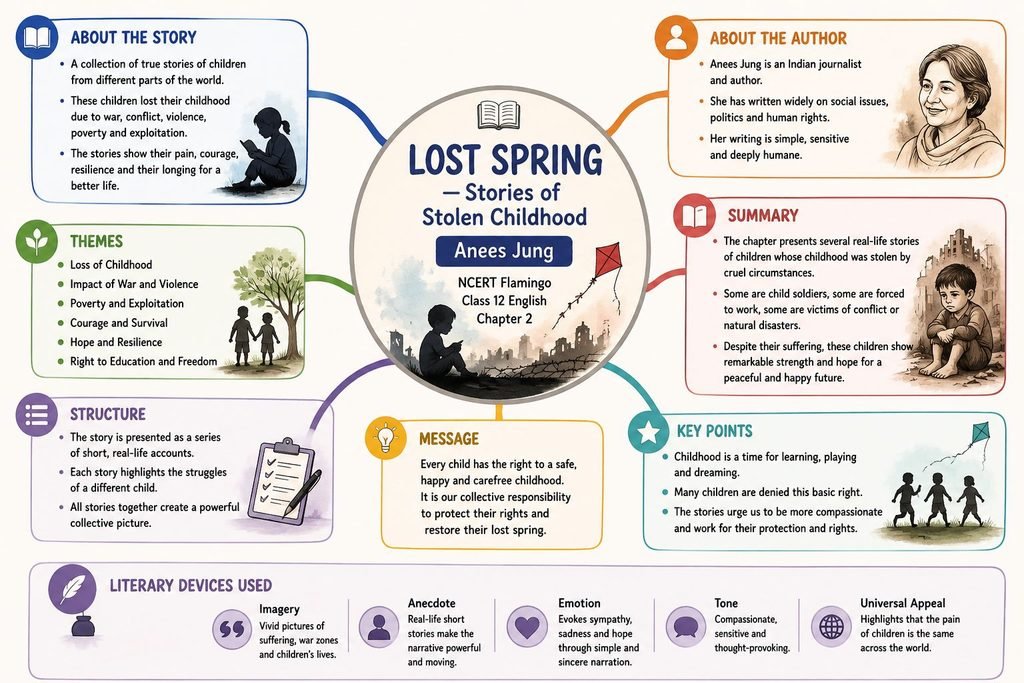
📝 important Points
Two parts: Saheb (Seemapuri) + Mukesh (Firozabad) — different settings, same stolen childhood.
Key symbols:
- Garbage = gold for ragpickers — survival, not choice
- Barefoot tradition — poverty normalized as culture
- Steel canister vs cloth bag — job looks like progress but kills freedom
- Glass bangles — beautiful for buyers, deadly for makers
- “Saheb-e-Alam” — biggest irony of the chapter
Key themes: Child labour, poverty cycle, broken dreams, false traditions, systemic exploitation.
Most important lines:
- “I am like the God who ran out of magic” — author’s guilt
- “I will be a mechanic” — Mukesh’s defiant dream
- Barefoot = “tradition” — poverty disguised as culture
Exam tip: Always connect Saheb and Mukesh — their stories are different but the root cause (poverty + systemic failure) is same. That connection will get you full marks.
CHARACTER SKETCHES / चरित्र चित्रण
🔸 1. Saheb-e-Alam (साहेब-ए-आलम)
English:
The name itself tells the whole story. “Saheb-e-Alam” — Lord of the Universe. And he is a barefoot boy picking garbage from the streets of Delhi.
That irony is not accidental. Anees Jung chose this name deliberately — to show the gap between what a child could be, and what poverty forces him to become.
Saheb came from Dhaka, Bangladesh. His family were farmers — they had land, they had roots. Then storms came. The fields were washed away. The family had nothing. They migrated to India — to Seemapuri — hoping for survival.
Saheb is a curious, gentle boy. He likes to play cricket. He peers into the author’s house with wondering eyes — because he has never seen a proper home. He takes the author’s careless offer of schooling seriously — because to him, even a small hope matters.
When he eventually gets a job at the tea stall — it looks like progress on the surface. But look closer. The steel canister is heavier than his old cloth bag. The wandering freedom is gone. The hopeful eyes become dull.
Saheb is what happens when a dream is offered — and then taken away.
Key traits:
- Innocent and curious
- Hopeful despite harsh circumstances
- Victim of both poverty and broken promises
- Represents millions of migrant children in India
- His “promotion” from ragpicker to tea-stall worker is actually a loss — of freedom, of self
Hindi (Devanagari):
नाम ही सारी कहानी कह देता है। “साहेब-ए-आलम” — ब्रह्मांड का मालिक। और वो दिल्ली की सड़कों पर नंगे पाँव कूड़ा बीनने वाला लड़का है।
यह विडंबना अनजाने में नहीं है। Anees Jung ने यह नाम जानबूझकर चुना — यह दिखाने के लिए कि एक बच्चा क्या हो सकता था — और गरीबी उसे क्या बनने पर मजबूर करती है।
साहेब ढाका, बांग्लादेश से आया। उसका परिवार किसान था — ज़मीन थी, जड़ें थीं। फिर तूफान आए। खेत बह गए। परिवार के पास कुछ नहीं बचा। वो भारत — सीमापुरी — आए, बस जीने की उम्मीद लेकर।
साहेब जिज्ञासु, कोमल लड़का है। क्रिकेट खेलना पसंद है। लेखिका के घर के अंदर हैरानी से झाँकता है — क्योंकि उसने कभी proper घर नहीं देखा। लेखिका की लापरवाह स्कूल वाली बात को seriously लेता है — क्योंकि उसके लिए एक छोटी सी उम्मीद भी बहुत मायने रखती है।
जब उसे चाय की दुकान पर नौकरी मिलती है — ऊपर से progress लगती है। पर ध्यान से देखो। Steel का कनस्तर उसके पुराने थैले से ज़्यादा भारी है। घूमने की आज़ादी चली गई। उम्मीद भरी आँखें बुझ गईं।
साहेब वही है जो होता है जब एक सपना दिया जाए — और फिर छीन लिया जाए।
मुख्य विशेषताएँ:
- निर्दोष और जिज्ञासु
- कठिन परिस्थितियों में भी उम्मीदवार
- गरीबी और टूटे वादों दोनों का शिकार
- भारत के लाखों प्रवासी बच्चों का प्रतिनिधित्व
- कूड़ा बीनने वाले से चाय वाले तक का “प्रमोशन” असल में नुकसान है — आज़ादी का, खुद का
🔸 2. Mukesh (मुकेश)
English:
Mukesh is different from Saheb in one important way — he dares to dream out loud.
He lives in Firozabad — the city of glass bangles. His family has worked in the bangle industry for generations. His father’s eyes are weak. His grandfather probably went blind. The cycle is clear. The future is visible — and it is dark.
But Mukesh — quietly, firmly — says: “I will become a motor mechanic.”
Not a bangle maker. Not his father’s work. Something entirely different. Something that requires training, skill, movement — things his current life doesn’t allow.
Is it a realistic dream? Honestly — maybe not. The system around him is designed to keep him exactly where he is. No money for training. No connections. No one to guide him.
But the fact that he has this dream — that he says it out loud — that is significant. Because in Firozabad, most children don’t even dare to imagine something different. They accept. They surrender.
Mukesh refuses to fully surrender. And that small refusal — that tiny flame — is what makes him memorable.
Key traits:
- Quietly determined — not loud, but firm
- Has a specific dream — not vague hope, but a concrete goal
- Represents the rare child who resists the cycle
- Emotionally restrained but internally strong
- His dream may or may not come true — but its existence itself is resistance
Hindi (Devanagari):
मुकेश साहेब से एक ज़रूरी तरीके से अलग है — वो खुलकर सपने देखने की हिम्मत रखता है।
वो फिरोज़ाबाद में रहता है — काँच की चूड़ियों का शहर। उसके परिवार ने पीढ़ियों से चूड़ी उद्योग में काम किया है। उसके पिता की आँखें कमज़ोर हैं। दादा शायद अंधे हो गए। दुष्चक्र साफ है। भविष्य दिखता है — और वो अंधेरा है।
पर मुकेश — शांत, दृढ़ता से — कहता है: “मैं मोटर मैकेनिक बनूँगा।”
चूड़ी बनाने वाला नहीं। अपने पिता का काम नहीं। कुछ बिल्कुल अलग। कुछ जिसके लिए training चाहिए, हुनर चाहिए, आज़ादी चाहिए — जो उसकी मौजूदा ज़िंदगी में नहीं है।
क्या यह realistic सपना है? सच में — शायद नहीं। उसके चारों ओर की व्यवस्था उसे वहीं रखने के लिए बनी है जहाँ वो है। Training के पैसे नहीं। कोई connection नहीं। कोई guide नहीं।
पर यह कि वो यह सपना रखता है — कि वो इसे ज़ोर से कहता है — यह महत्वपूर्ण है। क्योंकि फिरोज़ाबाद में ज़्यादातर बच्चे कुछ अलग सोचने की हिम्मत भी नहीं करते। वो मान लेते हैं। समर्पण कर देते हैं।
मुकेश पूरी तरह समर्पण नहीं करता। और वो छोटी सी मना करना — वो छोटी सी लौ — यही उसे यादगार बनाती है।
मुख्य विशेषताएँ:
- शांत दृढ़ता — शोरगुल नहीं, पर मज़बूत
- एक specific सपना — अस्पष्ट उम्मीद नहीं, एक concrete लक्ष्य
- उस दुर्लभ बच्चे का प्रतिनिधित्व जो दुष्चक्र का विरोध करता है
- बाहर से शांत पर अंदर से मज़बूत
- उसका सपना पूरा हो या न हो — पर उसका होना ही प्रतिरोध है
🔸 3. Anees Jung (The Author / Narrator)
English:
She is not just the narrator — she is a character in this chapter. And an honest one.
She comes from privilege — educated, well-traveled, comfortable. She enters Seemapuri and Firozabad as an outsider. She watches. She listens. She asks questions.
But she also makes a careless promise — and breaks it. She calls herself “the magician who ran out of magic.” That self-awareness — that guilt — makes her different from most observers.
She doesn’t pretend to have solutions. She doesn’t end the chapter with hope or a neat resolution. She just shows — this is what exists. Look at it. Really look.
Her honesty about her own limitations makes the chapter more powerful — not less.
Key traits:
- Empathetic observer — sees beyond the surface
- Honest about her own privilege and limitations
- Gives voice to the voiceless — but doesn’t claim to “save” them
- Her guilt is the reader’s guilt — intentionally
Hindi (Devanagari):
वो सिर्फ narrator नहीं हैं — वो इस अध्याय में एक किरदार हैं। और एक ईमानदार किरदार।
वो सुविधासंपन्न पृष्ठभूमि से हैं — पढ़ी-लिखी, दुनिया देखी हुई, आरामदेह। वो सीमापुरी और फिरोज़ाबाद में एक बाहरी व्यक्ति के रूप में आती हैं। देखती हैं। सुनती हैं। सवाल पूछती हैं।
पर वो एक लापरवाह वादा भी करती हैं — और तोड़ती हैं। खुद को “वो जादूगर जिसका जादू खत्म हो गया” कहती हैं। यह self-awareness — यह अपराधबोध — उन्हें ज़्यादातर observers से अलग बनाता है।
वो solutions होने का दावा नहीं करतीं। Chapter को उम्मीद या neat resolution के साथ खत्म नहीं करतीं। बस दिखाती हैं — यह मौजूद है। इसे देखो। सच में देखो।
अपनी सीमाओं के बारे में उनकी ईमानदारी chapter को कमज़ोर नहीं — और ज़्यादा powerful बनाती है।
मुख्य विशेषताएँ:
- सहानुभूतिपूर्ण observer — सतह से परे देखती हैं
- अपने privilege और सीमाओं के बारे में ईमानदार
- आवाज़हीन को आवाज़ देती हैं — पर “बचाने” का दावा नहीं करतीं
- उनका अपराधबोध पाठक का अपराधबोध है — जानबूझकर
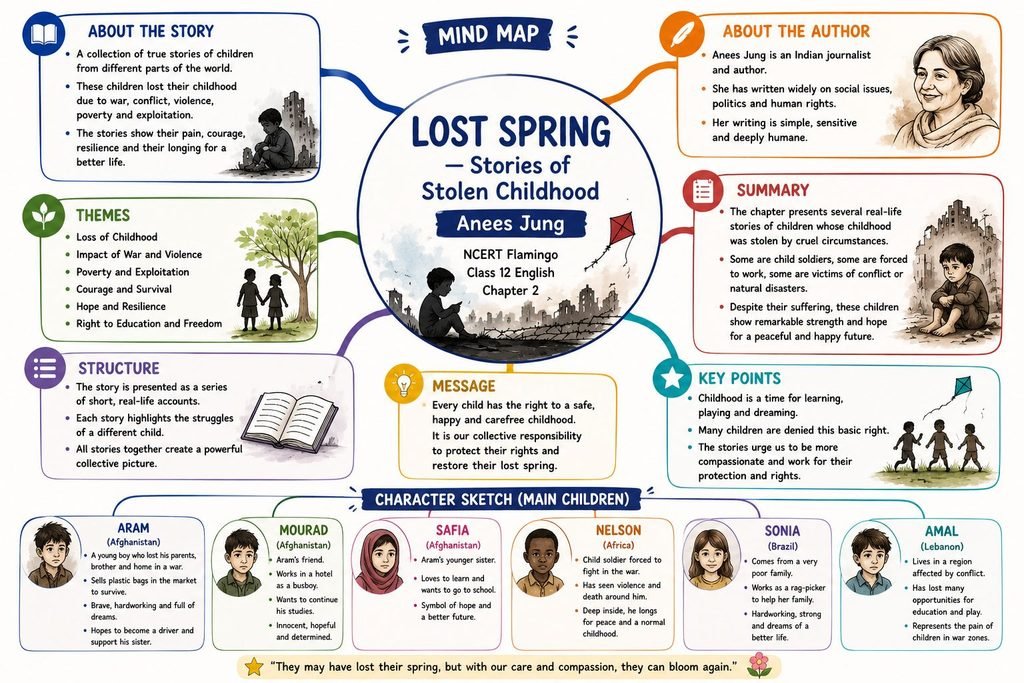
📝 Quick Revision — Exam Ready
5 Themes in one line each:
- Poverty = vicious cycle, not just bad luck
- Childhood stolen = Lost Spring of the title
- False traditions = exploitation in disguise
- Dreams vs reality = Mukesh’s flame in darkness
- Privileged responsibility = author’s guilt = our guilt
3 Characters in one line each:
- Saheb = hope offered and taken away
- Mukesh = small dream, big resistance
- Anees Jung = honest witness who admits her own failure
Most important symbol:
- Barefoot = poverty normalized as tradition
- Steel canister > cloth bag = job that kills freedom
- Glass bangles = beautiful outside, deadly inside
Lost Spring — Theme
Jab pehli baar “Lost Spring” padha toh laga — yeh toh bas do bachhon ki kahani hai. Saheb aur Mukesh. Ek kachra beenta hai, ek chudiyan banata hai. Simple.
Par jab sochta raha… toh samajh aaya. Yeh kahani itni badi hai.
Anees Jung ne is chapter mein jo sabse bada sach pakda hai woh yeh hai — bachpan ek luxury ban gaya hai. Jo bachhe ameer ghar mein paida hote hain unhe milta hai — school, khel, sapne, kal. Jo gareeb ghar mein paida hote hain unhe milta hai — kaam, bojh, andhera, aur ek aisa kal jo kabhi nahi badlega. Saheb ka poora naam hai “Saheb-e-Alam” — matlab “Brahmaand ka Maalik.” Aur woh nange paon Delhi ki sadkon par kachra beenta hai. Yeh sirf ek naam nahi — yeh ek taana hai poore system ko. Mukesh Firozabad ki un tankiyon mein kaam karta hai jahan hawa nahi pahunchti, roshni nahi pahunchti, aur sapne bhi mushkil se pahunchte hain. Uske baap ki aankhein kamzor hain. Daada shayad andhe ho gaye. Yeh “parampara” nahi hai — yeh shosan hai jo itni baar dohraya gaya ki ab parampara jaisa dikhne laga. Aur yahi sabse khatarnak cheez hai is chapter mein — jab zulm itna purana ho jaata hai ki log use apna naseeb samajhne lagte hain. Sahukaar hain, bichauliye hain, neta hain, police hai — sab milke ek aisi vyavastha banaye baithey hain jisme se nikalna almost namukin hai. Har darwaza band hai. Aur kaafi waqt baad — log darwaza dhundhna hi band kar dete hain. Isliye Mukesh ka woh ek chhota sa sapna — “main mechanic banunga, car chalaaunga” — itna bada lagta hai. Kyunki us duniya mein sapna dekhna hi ek kism ka virodh hai. Saheb ke paas bhi sapna tha — school ka. Lekhika ne wada kiya, woh wada toota, aur woh sapna shuru hone se pehle hi khatam ho gaya. Woh khud likhti hain — “main woh jaadugaar hoon jiska jaadu khatam ho gaya.” Aur yahi line hai jo padhke ruk jaata hoon. Kyunki yeh sirf unka apradh bodh nahi — yeh hamara apradh bodh hai. Hum sab dekhte hain. Hum sab jaante hain. Aur hum sab… aage badh jaate hain. Anees Jung ne yeh chapter isliye nahi likha ki hum tars khayein. Unhone isliye likha taaki hum dekh sakein — sach mein dekh sakein. “Lost Spring” ka matlab hai — woh mausam jo in bachhon ki zindagi mein kabhi aaya hi nahi. Woh khilne ka waqt. Woh azaad hone ka waqt. Chhin gaya — khamoshi se, vyavasthit tarike se, rozana.
Lost Spring — Textbook Questions
Understanding the Text & Talking about the Text
🔍 UNDERSTANDING THE TEXT
Q1. What could be some of the reasons for the migration of people from villages to cities?
Yeh sawaal padhke seedha Saheb yaad aata hai. Uska parivaar Bangladesh se aaya. Kyun? Kyunki koi option nahi tha.
Migration ka koi ek karan nahi hota — yeh kai cheezoon ka mila-jula result hai…
Natural Disasters and Climate:
Saheb ke parivaar ki hi kahani lo — toofaan aaye, khet beh gaye, ghar toot gaye. Floods, droughts, cyclones — yeh sab gaon ki economy ko ek jhatkhe mein khatam kar dete hain. Khet nahi — toh khaana nahi. Khaana nahi — toh sheher. Seedha equation.
No Employment in Villages:
Gaon mein kaam sirf kheti hai zyaadatar. Aur kheti mausam par depend karti hai, zameen par depend karti hai, paani par depend karti hai. Jab in mein se koi bhi fail ho — aadmi khali haath baithta hai. Sheher mein kam se kam kuch toh kaam milta hai — construction, factories, domestic work.
Poverty and Debt:
Gaon mein sahukaar ka chakkar hai. Ek baar karz liya — poori zindagi utarne mein jaati hai. Us karz se bachne ke liye log sheher bhaag jaate hain — ek nai shuruat ki umeed mein.
Lack of Basic Facilities:
Schools nahi. Hospitals nahi. Roads nahi. Bijli nahi. Log apne bachhon ke liye behtar zindagi chahte hain — toh sheher jaate hain. Irony yeh hai ki sheher mein bhi Seemapuri jaisi jagahein milti hain — jahan yeh sab phir bhi nahi hota.
Dreams and Aspirations:
Har koi Saheb jaisa nahi hota jo majboor ho. Kuch log khud choice karte hain — “sheher mein zyaada opportunities hain.” Yeh partly sach bhi hai. Par sheher ki chamak dekhke reality ko bhool jaate hain.
Sad truth: Log gaon se sheher isliye nahi aate ki sheher achha hai. Aate hain kyunki gaon mein rehna impossible ho jaata hai.
Q2. Would you agree that promises made to poor children are rarely kept? Why does this happen in the text?
Haan. Honestly — haan.
Aur yeh maanna uncomfortable hai. Par sach hai.
In the text — what happened:
Anees Jung ne Saheb se half-jokingly kaha — “agar tum aao toh main apne school mein padhauungi.” Woh serious nahi thi. Ek casual baat thi — jaise hum log aise hi keh dete hain “haan zaroor milenge” aur phir kabhi nahi milte.
Par Saheb ne seriously liya. Kyun? Kyunki uske paas khone ke liye kuch nahi tha. Ek chhoti si umeed bhi uske liye bahut badi thi. Woh roz aane laga. Ummeedon ke saath.
Aur phir — kuch nahi hua. Lekhika ne realize kiya woh fulfill nahi kar sakti. Aur Saheb ka woh chhota sa sapna — chup chaap — khatam ho gaya.
Why does this happen — broadly:
Pehli baat — intention aur commitment mein fark hota hai. Hum feel good karne ke liye baat karte hain — “haan kuch karna chahiye in bachhon ke liye.” Par feeling good aur actually karna — bahut alag cheezein hain.
Doosri baat — privilege ki duniya aur gareeb ki duniya ka time scale alag hota hai. Lekhika ke liye woh ek passing conversation thi. Saheb ke liye woh puri zindagi ki disha thi.
Teesri baat — system itna bada hai ki ek insaan ki koshish chhoti pad jaati hai. Chahte hue bhi — ek school, ek teacher, ek writer — kya kar sakti hai un haalaaton ke khilaaf jo Saheb ko wahan rakhe hain?
Chauthi baat — hum discomfort se bhagte hain. Saheb ki zindagi mein involve hona matlab ek zimmedari lena — jo humari “normal” zindagi mein fit nahi hoti. Toh promise ho jaata hai. Aur phir bhool jaata hai.
Lekhika ki sher-dili yeh hai ki unhone yeh apradh khud sweekar kiya. Zyaadatar log toh yeh bhi nahi karte.
Q3. What forces conspire to keep the workers in the bangle industry of Firozabad in poverty?
Yeh sawaal sabse important hai. Kyunki yeh sirf ek insaan ya ek parivaar ki baat nahi — yeh ek poori system ki baat hai.
Anees Jung ne bahut clearly likha hai — kai forces milke kaam karte hain…
1. The Moneylenders (Sahukaar):
Sabse pehle aur sabse powerful. Ye log in garib parivaaron ko karz dete hain — zaroorat ke waqt. Kyunki aur koi deta nahi. Aur phir woh karz itna badh jaata hai ki poori zindagi utarne mein lagti hai. Baap ka karz beta utaarta hai. Beta ka karz pota. Karz ek virasat ban jaati hai.
2. The Middlemen (Bichauliye):
Chudiyan banane wale ko unki mehnat ka sahi daam nahi milta. Bichauliye hain jo manufacturer se khareedte hain saste mein, bechte hain mehenga. Profit unka. Kamaai unki. Kaam inkaaa. Yeh ek aisa chakkar hai jisme worker hamesha neeche rehta hai.
3. Corrupt Officials and Police:
Agar workers organize karna chahein — union banana chahein — toh police aa jaati hai. Haraas hota hai. Dhamkiyaan milti hain. System unhe protect nahi karta — system unhe jagah par rakhta hai.
4. Politicians:
Vote lene aate hain. Promises karte hain. Jaate hain. Firozabad ke bangle workers ki halat elections ke baad bhi wahi rehti hai. Koi genuinely nahi sunta — kyunki inke paas power nahi, influence nahi, voice nahi.
5. Caste System and Social Conditioning:
Shayad sabse gehri zanjeer. Logon ko saat peedhiyon se yahi karte dekha hai. Toh lagne lagta hai — “hamaari jaat ka kaam yahi hai.” “Kismet mein yahi likha hai.” Yeh soch khud hi ek prison ban jaati hai. Bahar ki zanjeer toot bhi jaaye — andar ki soch nahi toot paati.
6. Lack of Education and Skill:
Bachhepan mein school nahi gaye — toh skills nahi hain. Skills nahi — toh alternative employment nahi. Alternative nahi — toh wahi factory. Wahi kaam. Wahi cycle.
In short: Sahukaar financially jodta hai. Bichauliya economically dabata hai. Police physically rokti hai. Neta politically ignore karta hai. Aur caste system mentally tod deta hai.
Sab milke ek aisi wall banate hain jise akele todna almost impossible hai.
💬 TALKING ABOUT THE TEXT
Q1. How, in your opinion, can Mukesh realise his dream?
Mukesh ka sapna hai — mechanic banna, car chalana. Chhota sapna. Par us duniya mein — revolutionary.
Kya ho sakta hai? Sochte hain practically…
Education and Vocational Training:
Sabse pehli zaroorat — ITI (Industrial Training Institute). Government ke vocational training centers hain jahan mechanical skills sikhate hain — free mein ya bahut kam fees mein. Agar Mukesh ko koi guide kare, wahan tak pahunchne mein madad kare — toh skills aa sakti hain.
NGO Support:
Kai NGOs hain jo Firozabad jaise areas mein kaam karti hain — Bachpan Bachao Andolan, CRY, Save the Children. Yeh organizations scholarships deti hain, vocational training karaati hain, legal support bhi. Agar Mukesh inse connect ho — ek rasta khul sakta hai.
Government Schemes:
Pradhan Mantri Kaushal Vikas Yojana (PMKVY) — free skill training scheme hai. Automotive sector ke liye specifically programs hain. Theoretically Mukesh eligible hai. Practically — use pata hona chahiye. Koi use bataye.
Community Support:
Agar gaon mein ek bhi insaan ho — ek teacher, ek social worker, ek returned migrant — jo Mukesh ko encourage kare, guide kare, connections de — toh sapna thoda realistic ho sakta hai.
Mukesh ki apni determination:
Aur yeh sabse important hai. Woh pehle hi “nahi” nahi keh raha. Woh sapna dekh raha hai — yeh khud ek badi baat hai us environment mein. Agar bahari support mile — toh andar ki aag kaam aa sakti hai.
Par honest baat: System bahut powerful hai. Sirf individual effort se nahi hoga. Systemic change chahiye — child labour laws ka enforcement, compulsory education, fair wages. Tabhi Mukesh jaiso ke liye raasta khulega.
Q2. Mention the hazards of working in the glass bangles industry.
Firozabad ki factories dekhke samajh aata hai — yahan kaam karna slowly khud ko khatam karna hai…
Eye Damage and Blindness:
Glass work karne ke liye furnace ki tej roshni mein ghanton kaam karna padta hai. Bina protection ke. Aankhein dhire dhire damage hoti hain. Mukesh ke baap ki aankhein kamzor hain. Hazaaron workers middle age tak andhe ho jaate hain.
Lung Disease:
Glass dust hawa mein rehti hai factories mein. Yeh dust saanson ke saath andar jaati hai. Sehelon mein yeh silicosis jaisi bimari deti hai — ek aisi condition jisme phephone slowly khatam hote hain. Koi cure nahi.
Extreme Heat:
Furnaces ke paas ghanton kaam — temperature itna zyaada hota hai ki normal insaan ko bearable nahi hoga. Dehydration, heat stroke, skin damage — yeh sab common hain.
Child Labour and Physical Harm:
Chhote bachhon ke chhote haath delicate glass work ke liye use hote hain. Unke growing bodies pe yeh stress bahut harmful hai. Cuts, burns, injuries — everyday reality hai.
No Safety Equipment:
Gloves nahi. Goggles nahi. Masks nahi. Workers bilkul unprotected hain. Kyunki safety equipment expensive hai — aur owners nahi dete.
Mental Health:
Yeh bhi ek hazard hai — jo dikhai nahi deta. Koi future nahi dikhta. Wahi kaam, wahi kamra, wahi andhera. Depression, hopelessness — in sab ka koi naam nahi hota in communities mein. Par exist karta hai.
Q3. Why should child labour be eliminated and how?
WHY — Kyun khatam hona chahiye:
Pehli baat — yeh human rights ka sawaal hai. Har bachche ko bachpan ka haq hai. Khel ka, school ka, sapne dekhne ka. Koi bhi aarthik majboori yeh haq nahi cheen sakti.
Doosri baat — yeh cycle tod nahi sakta. Jab baccha kaam karta hai — school nahi jaata. School nahi — skills nahi. Skills nahi — behtareen future nahi. Matlab — woh wahi poverty mein rahega jo uske baap mein thi. Aur uske baap ke baap mein. Child labour gareeb ko aur garib banata hai.
Teesri baat — yeh physically aur mentally barbad karta hai. Mukesh ke factory mein bachhon ki aankhein damage hoti hain. Phephone damage hote hain. Yeh ek aisi keemat hai jo poori umar chukani padti hai.
Chauthi baat — samaj ka loss hota hai. Har Mukesh mein ek mechanic chhupta hai. Har Saheb mein kuch aur ho sakta tha. Jab hum unhe force karte hain ek hi kaam karne ke liye — hum unki potential waste karte hain. Aur society ki bhi.
HOW — Kaise khatam ho:
Strict enforcement of laws — Child Labour Prohibition Act exist karta hai. Implement nahi hota. Police, courts, NGOs sab milke yeh enforce karein.
Free and compulsory education — sirf naam ke liye nahi. Real schools. Real teachers. Mid-day meals taaki bacche aayein. Agar school attractive ho — families bhejenge.
Economic support to families — agar baap ko itna milta ki ghar chale — toh bacche ko kaam nahi karna padta. Fair wages, social security, MGNREGA jaisi schemes ka expansion.
Awareness — communities ko batao ki child labour illegal hai. Aur zyaada important — unhe batao ki alternative hai. Tabhi woh choose karenge.
Consumer responsibility — hum jo chudiyan khareedte hain — kahan se aati hain? Agar hum aware hon aur ethically sourced products ko prefer karein — companies ko bhi badalna padega.
Aakhri baat: Child labour khatam nahi hoga sirf laws se. Hoga jab gareeb ke paas option hoga. Jab khaana guarantee ho. Jab school real ho. Jab kaam ki jagah dignity ho.
Tab Mukesh ko factory mein nahi jaana padega. Woh mechanic ban sakta hai. Sachchi mein.
सिल्वर वैडिंग : मनोहर श्याम जोशी | Class 12 Hindi Vitan Chapter 1
The Last Lesson By Alphonse Daudet | Class 12 English Flamingo Chapter 1
[…] Lost Spring By Anees Jung | Class 12 English […]
[…] सिल्वर वैडिंग : मनोहर श्याम जोशी | Class 12 Hindi Vitan Chapter 1: सारांश, प्रश्न-उत्तरLost Spring By Anees Jung | Class 12 English Flamingo Chapter 2 […]