✍️ About the Author
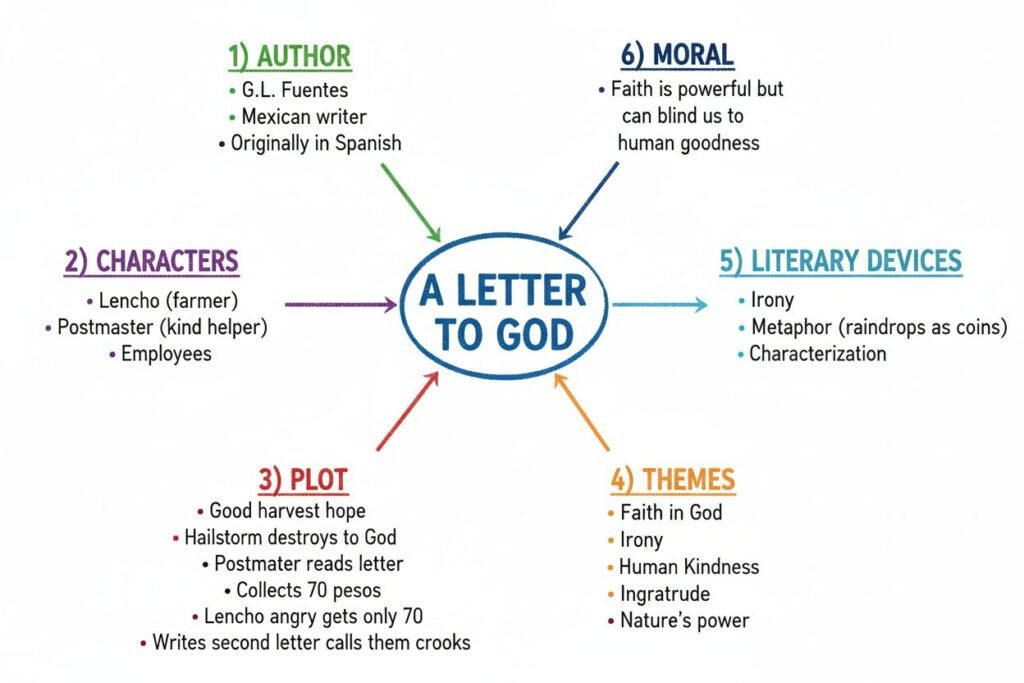
G.L. Fuentes (Gregorio López y Fuentes) was a Mexican novelist and journalist. He wrote about the lives of common people — farmers, villagers, the poor. This story was originally written in Spanish and later translated into English. It beautifully captures faith, irony, and human nature.
📖 SUMMARY (English)
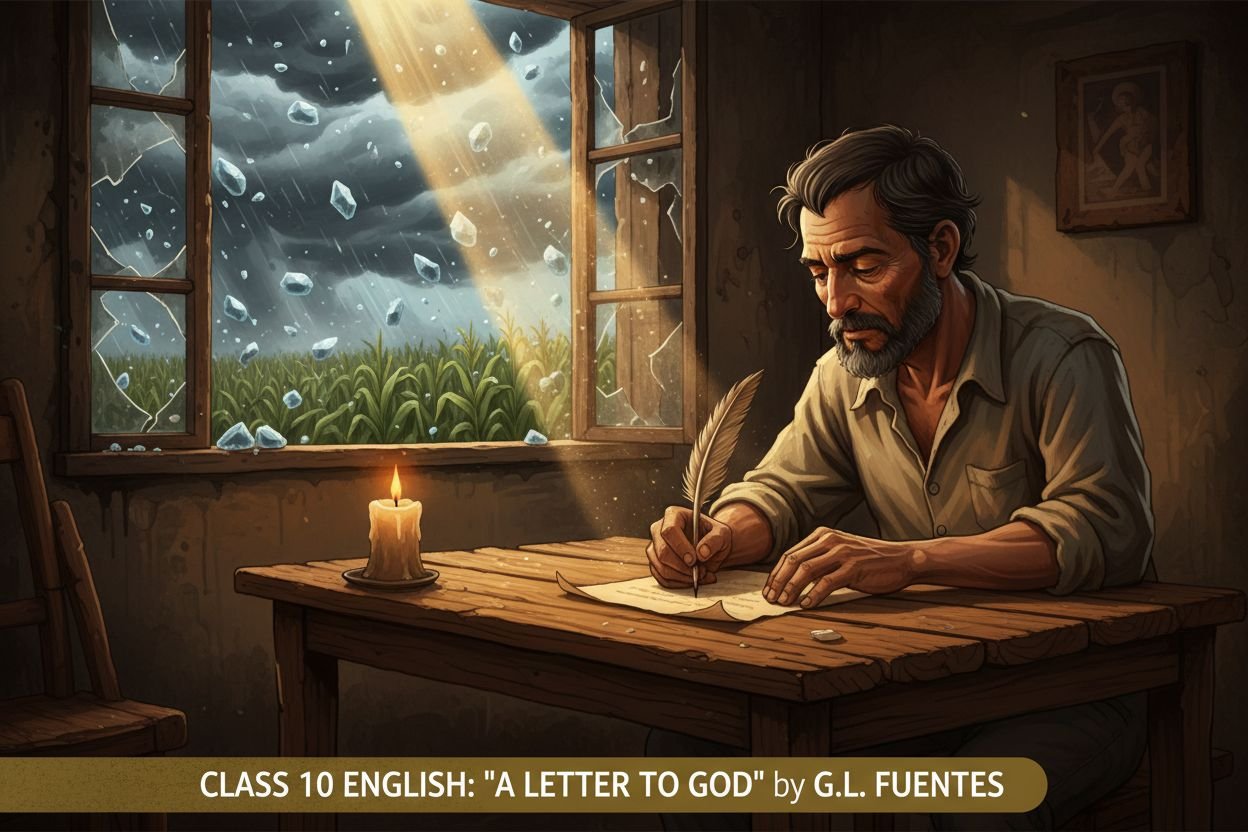
Lencho was a hardworking farmer who lived on a hill. His only hope that year was a good harvest of corn and beans. One Sunday, while having lunch with his family, he noticed dark clouds gathering. He was happy — rain meant a good crop.
But the rain turned into a hailstorm. In just one hour, everything was destroyed. The fields were completely ruined. Not a leaf remained on the trees. Lencho was devastated. His entire year’s work was gone.
But Lencho had unshakeable faith in God. He sat down and wrote a letter — addressed to God — asking for 100 pesos to sow his fields again and survive until the next harvest.
He went to the post office and dropped the letter in the mailbox. The postmaster, a fat and amiable man, found the letter and was deeply moved by Lencho’s faith. He didn’t want to shake that faith. So he collected money from his employees and friends — but could only gather 70 pesos.
He put the money in an envelope and sent it to Lencho, signing it as “God.”
When Lencho received the letter, he was not fully satisfied. He counted the money — only 70 pesos, not 100. He was angry. He sat down and wrote another letter to God, saying:
“God, of the money that I asked for, only seventy pesos reached me. Send me the rest, but not through the mail, because the post office employees are a bunch of crooks.”
The story ends with deep irony — the very people who helped Lencho out of kindness were called crooks by him.
📖 सारांश (हिंदी)
लेंचो एक मेहनती किसान था जो एक पहाड़ी पर रहता था। उस साल उसकी सारी उम्मीद अच्छी फसल पर टिकी थी। एक रविवार को परिवार के साथ खाना खाते हुए उसने काले बादल देखे — वह खुश हुआ, बारिश फसल के लिए अच्छी होती।
लेकिन बारिश ओलावृष्टि में बदल गई। एक घंटे में सब कुछ बर्बाद हो गया। खेत तबाह, पेड़ों पर एक पत्ता नहीं बचा। लेंचो टूट गया।
पर उसकी ईश्वर में अटूट आस्था थी। उसने ईश्वर को पत्र लिखा — 100 पेसो माँगे ताकि दोबारा बुआई कर सके।
पत्र पोस्ट ऑफिस पहुँचा। पोस्टमास्टर ने पत्र पढ़ा और लेंचो की आस्था से प्रभावित हुआ। उसने अपने कर्मचारियों और दोस्तों से पैसे इकट्ठे किए — 70 पेसो मिले। उसने “ईश्वर” के नाम से पत्र भेज दिया।
लेंचो को पैसे मिले — पर 70 ही। वह नाराज़ हुआ और दूसरा पत्र लिखा — “बाकी पैसे भेजो, पर डाकघर से नहीं, क्योंकि वहाँ के कर्मचारी बेईमान हैं।”
यही इस कहानी की गहरी विडंबना है।
🎯 THEMES (English)
1. Unshakeable Faith in God Lencho’s faith is the central theme. He never doubts God — not even after losing everything. He writes to God as naturally as one writes to a friend. His faith is childlike, pure, and absolute.
2. Irony The biggest irony — the people who helped Lencho selflessly were called “crooks” by him. The postmaster’s kindness went unrecognized and was even insulted.
3. Human Kindness The postmaster represents the goodness in humanity. Without any personal benefit, he collected money and helped a stranger — just to protect his faith.
4. Greed vs. Contentment Lencho received 70 pesos — a generous act — but he was unhappy because he expected 100. This shows how expectations can blind us to gratitude.
5. Nature’s Power The hailstorm shows how nature can destroy everything in moments — no matter how hard a farmer works.
🎯 विषय-वस्तु / थीम (हिंदी)
1. ईश्वर में अटूट आस्था लेंचो की आस्था इस कहानी का केंद्र है। सब कुछ खोने के बाद भी उसने ईश्वर पर भरोसा नहीं खोया। यह आस्था बाल-सुलभ, निश्छल और पूर्ण है।
2. विडंबना (Irony) जिन लोगों ने निःस्वार्थ भाव से मदद की, उन्हें ही लेंचो ने “बेईमान” कह दिया। यही इस कहानी की सबसे गहरी विडंबना है।
3. मानवीय दयालुता पोस्टमास्टर मानवता की अच्छाई का प्रतीक है। बिना किसी स्वार्थ के उसने एक अजनबी की मदद की।
4. लालच बनाम संतोष 70 पेसो मिलने पर भी लेंचो नाखुश था — क्योंकि उसे 100 चाहिए थे। यह दिखाता है कि अपेक्षाएँ कृतज्ञता को कैसे अंधा कर देती हैं।
5. प्रकृति की शक्ति ओलावृष्टि दिखाती है कि प्रकृति पलभर में सब कुछ नष्ट कर सकती है।
👥 CHARACTERS (English)
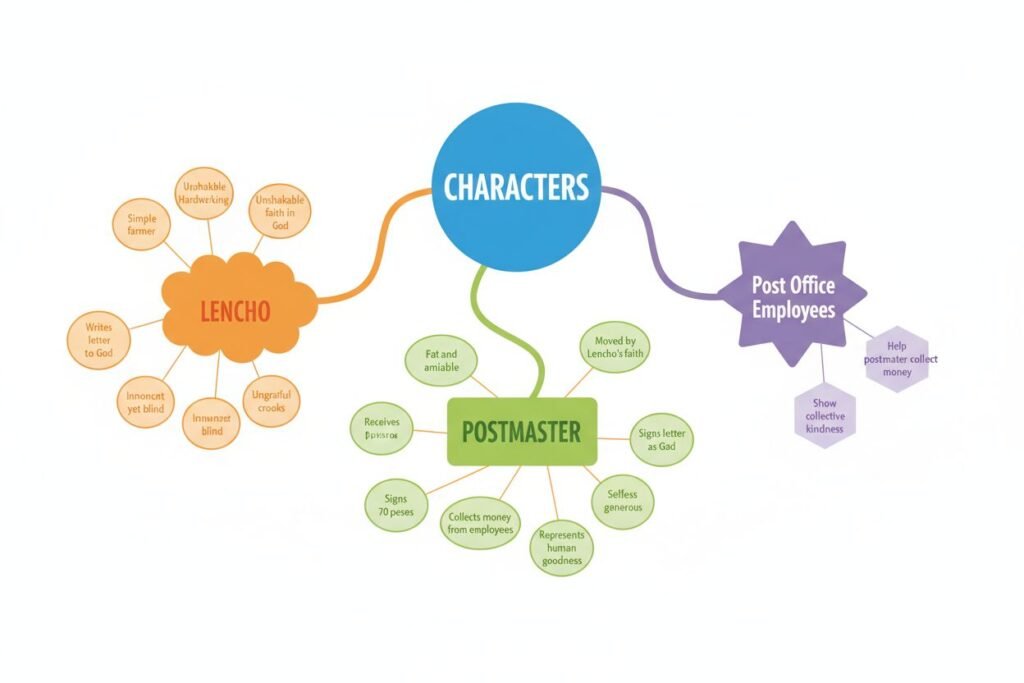
1. Lencho
- A simple, hardworking farmer
- Has deep, unquestioning faith in God
- Writes to God without any hesitation — shows his innocence
- But also shows ingratitude — calls the helpers “crooks”
- Represents both the beauty of faith and the blindness of expectation
2. The Postmaster
- Fat, amiable, kind-hearted man
- Deeply moved by Lencho’s faith
- Takes initiative to collect money — shows true human kindness
- Represents the goodness of humanity
- Signs the letter as “God” — a selfless act
3. Lencho’s Family
- Minor characters
- Show the impact of the hailstorm on the family
- Represent the common farmer’s vulnerability
4. Post Office Employees
- Helped the postmaster collect money
- Show collective human kindness
👥 पात्र-परिचय (हिंदी)
1. लेंचो
- सरल, मेहनती किसान
- ईश्वर में गहरी, निःसंदेह आस्था
- बिना झिझक ईश्वर को पत्र लिखता है — यह उसकी मासूमियत है
- पर मददगारों को “बेईमान” कहता है — यह उसकी कृतघ्नता है
- आस्था की सुंदरता और अपेक्षा की अंधता — दोनों का प्रतीक
2. पोस्टमास्टर
- मोटा, मिलनसार, दयालु व्यक्ति
- लेंचो की आस्था से गहरा प्रभावित
- पैसे इकट्ठे करके मदद करता है — सच्ची मानवता का प्रतीक
- “ईश्वर” के नाम से पत्र भेजता है — निःस्वार्थ कार्य
3. लेंचो का परिवार
- गौण पात्र
- ओलावृष्टि का प्रभाव दिखाते हैं
4. डाकघर के कर्मचारी
- पोस्टमास्टर की मदद करते हैं
- सामूहिक मानवीय दयालुता के प्रतीक
✅ QUESTION ANSWERS (English)
Q1. What did Lencho hope for? Lencho hoped for rain to save his crop of corn and beans. He was a farmer who depended entirely on a good harvest for his family’s survival.
Q2. What happened to Lencho’s fields? A hailstorm destroyed everything. In just one hour, the fields were completely ruined — not a leaf remained on the trees, the corn was totally destroyed, and the flowers were gone from the bean plants.
Q3. What was Lencho’s reaction after the hailstorm? Lencho was deeply saddened. He said his soul was filled with sorrow. But he did not lose faith in God. He decided to write a letter to God asking for help.
Q4. What did Lencho write in his letter to God? Lencho wrote that he needed 100 pesos to sow his fields again and to survive until the next crop. He asked God to send the money because he had no other hope.
Q5. How did the postmaster react to the letter? The postmaster was deeply moved by Lencho’s faith. He didn’t want to shake that faith. So he decided to collect money and send it to Lencho, signing the letter as “God.”
Q6. How much money did the postmaster manage to collect? The postmaster could only collect 70 pesos — not the full 100 that Lencho had asked for. He contributed part of his own salary and collected the rest from employees and friends.
Q7. What did Lencho do when he received the money? Lencho counted the money and found only 70 pesos. He was angry and immediately wrote another letter to God, asking for the remaining 30 pesos and warning God not to send it through the post office because the employees were “a bunch of crooks.”
Q8. What is the irony in the story? The greatest irony is that the postmaster and his employees — who helped Lencho out of pure kindness — were called “crooks” by Lencho. The very people who acted as God’s instruments were accused of stealing.
Q9. What does the story tell us about faith? The story shows that Lencho’s faith in God was absolute and unshakeable. Even after losing everything, he believed God would help him. His faith was so strong that he never doubted God — he only doubted the humans around him.
Q10. What kind of man was the postmaster? The postmaster was a kind, generous, and empathetic man. He was moved by Lencho’s faith and took it upon himself to help a stranger. He represents the best of human nature — selfless, compassionate, and action-oriented.
✅ प्रश्न-उत्तर (हिंदी)
प्र.1. लेंचो को किस बात की उम्मीद थी? लेंचो को अच्छी बारिश की उम्मीद थी ताकि उसकी मक्के और फलियों की फसल अच्छी हो। उसके परिवार की पूरी उम्मीद उसी फसल पर टिकी थी।
प्र.2. लेंचो के खेतों का क्या हुआ? ओलावृष्टि ने सब कुछ बर्बाद कर दिया। एक घंटे में खेत तबाह हो गए — पेड़ों पर एक पत्ता नहीं बचा, मक्का पूरी तरह नष्ट हो गया, फलियों के फूल झड़ गए।
प्र.3. ओलावृष्टि के बाद लेंचो की क्या प्रतिक्रिया थी? लेंचो बहुत दुखी हुआ। उसने कहा उसकी आत्मा दुख से भर गई। पर उसने ईश्वर में आस्था नहीं खोई और ईश्वर को पत्र लिखने का निर्णय किया।
प्र.4. लेंचो ने ईश्वर को पत्र में क्या लिखा? उसने लिखा कि उसे 100 पेसो चाहिए ताकि वह दोबारा बुआई कर सके और अगली फसल तक परिवार का पेट भर सके।
प्र.5. पोस्टमास्टर ने पत्र पढ़कर क्या किया? पोस्टमास्टर लेंचो की आस्था से बहुत प्रभावित हुआ। उसने उस आस्था को टूटने नहीं देना चाहा। उसने पैसे इकट्ठे किए और “ईश्वर” के नाम से पत्र भेजा।
प्र.6. पोस्टमास्टर कितने पैसे इकट्ठे कर पाया? केवल 70 पेसो — 100 नहीं। उसने अपनी तनख्वाह का हिस्सा दिया और बाकी कर्मचारियों व दोस्तों से माँगा।
प्र.7. पैसे मिलने पर लेंचो ने क्या किया? लेंचो ने पैसे गिने — 70 ही थे। वह नाराज़ हुआ और दूसरा पत्र लिखा — बाकी 30 पेसो माँगे और कहा डाकघर से मत भेजना क्योंकि वहाँ के कर्मचारी बेईमान हैं।
प्र.8. इस कहानी में विडंबना क्या है? सबसे बड़ी विडंबना यह है कि जिन लोगों ने निःस्वार्थ भाव से मदद की, उन्हें ही लेंचो ने “बेईमान” कह दिया। ईश्वर के माध्यम बने लोगों पर ही चोरी का आरोप लगाया।
प्र.9. यह कहानी आस्था के बारे में क्या बताती है? यह कहानी बताती है कि लेंचो की आस्था अटूट थी। सब कुछ खोने के बाद भी उसने ईश्वर पर भरोसा रखा। उसने इंसानों पर शक किया, ईश्वर पर नहीं।
प्र.10. पोस्टमास्टर कैसा व्यक्ति था? पोस्टमास्टर दयालु, उदार और संवेदनशील व्यक्ति था। उसने एक अजनबी की मदद बिना किसी स्वार्थ के की। वह मानवता की अच्छाई का प्रतीक है।
🔘 MCQs — A Letter to God
1. Who wrote “A Letter to God”?
- a) O. Henry
- b) ✅ G.L. Fuentes
- c) Guy de Maupassant
- d) Anton Chekhov
2. What crop did Lencho grow?
- a) Wheat and rice
- b) ✅ Corn and beans
- c) Cotton and sugarcane
- d) Potatoes and tomatoes
3. What destroyed Lencho’s crop?
- a) Flood
- b) Drought
- c) ✅ Hailstorm
- d) Fire
4. How much money did Lencho ask God for?
- a) 50 pesos
- b) 70 pesos
- c) ✅ 100 pesos
- d) 150 pesos
5. How much money did Lencho actually receive?
- a) 50 pesos
- b) ✅ 70 pesos
- c) 100 pesos
- d) 30 pesos
6. Who collected money to send to Lencho?
- a) Lencho’s neighbour
- b) The mayor
- c) ✅ The postmaster
- d) A priest
7. What name did the postmaster sign on the letter?
- a) The Postmaster
- b) A Friend
- c) Anonymous
- d) ✅ God
8. What did Lencho call the post office employees in his second letter?
- a) Angels
- b) Helpers
- c) ✅ A bunch of crooks
- d) Honest men
9. What is the main theme of the story?
- a) Poverty
- b) Nature’s beauty
- c) ✅ Unshakeable faith and irony
- d) Friendship
10. What does the postmaster represent in the story?
- a) Greed
- b) ✅ Human kindness and goodness
- c) Government authority
- d) Religious faith
11. Where did Lencho live?
- a) In a city
- b) Near a river
- c) ✅ On a hill
- d) In a valley
12. What literary device is most prominent in this story?
- a) Metaphor
- b) Simile
- c) ✅ Irony
- d) Alliteration
13. Why was Lencho not satisfied with the money he received?
- a) The money was fake
- b) He wanted more than 100 pesos
- c) ✅ He received only 70 pesos instead of 100
- d) The envelope was torn
14. What did Lencho compare the raindrops to before the hailstorm?
- a) Diamonds
- b) ✅ New coins (silver and gold)
- c) Pearls
- d) Stars
15. What is the original language of this story?
- a) English
- b) Portuguese
- c) French
- d) ✅ Spanish
✍️ WRITING SECTION
Important Writing Topics:
1. Character Sketch — Lencho (English)
Lencho is a simple, hardworking Mexican farmer whose life revolves around his crops. His most striking quality is his absolute, childlike faith in God. When a hailstorm destroys his entire harvest, he does not despair — he writes a letter to God as naturally as one would write to a trusted friend. This shows his innocence and deep spiritual belief.
However, Lencho also reveals a flaw — ingratitude. When he receives 70 pesos instead of 100, he immediately suspects the post office employees of stealing, calling them “crooks.” He never considers that humans helped him. His faith in God is so complete that he cannot imagine God failing him — so the “missing” 30 pesos must have been stolen by humans.
Lencho is thus a complex character — admirable in his faith, yet blind in his expectations.
2. पात्र-चित्रण — लेंचो (हिंदी)
लेंचो एक सरल, मेहनती मैक्सिकन किसान है। उसकी सबसे बड़ी विशेषता है ईश्वर में उसकी अटूट, बाल-सुलभ आस्था। ओलावृष्टि से सब कुछ नष्ट होने के बाद भी वह निराश नहीं होता — वह ईश्वर को पत्र लिखता है जैसे किसी विश्वस्त मित्र को।
पर लेंचो में एक कमज़ोरी भी है — कृतघ्नता। 70 पेसो मिलने पर वह डाकघर के कर्मचारियों को “बेईमान” कह देता है। उसे यह नहीं सूझता कि इंसानों ने उसकी मदद की। उसकी आस्था इतनी पूर्ण है कि वह ईश्वर को दोष नहीं दे सकता — इसलिए दोष इंसानों पर डाल देता है।
लेंचो एक जटिल पात्र है — आस्था में प्रशंसनीय, पर अपेक्षाओं में अंधा।
3. The Role of Irony in “A Letter to God” (English)
Irony is the soul of this story. G.L. Fuentes uses it masterfully to create a powerful ending.
The first irony — Lencho writes to God, and humans become God’s instruments to help him. But Lencho never realizes this.
The second and deeper irony — the postmaster and his employees, who acted out of pure kindness and selflessness, are accused of being “crooks” by the very person they helped. Their good deed goes not just unrecognized but is actively insulted.
This irony makes us reflect — sometimes our blind faith makes us ungrateful to the real helpers around us. The story questions whether faith, when taken to an extreme, can make us blind to human goodness.
4. मानवीय दयालुता — “A Letter to God” के संदर्भ में (हिंदी)
इस कहानी में पोस्टमास्टर मानवीय दयालुता का सर्वश्रेष्ठ उदाहरण है। उसने एक अजनबी किसान का पत्र पढ़ा और उसकी आस्था से इतना प्रभावित हुआ कि उसने अपनी जेब से पैसे दिए और दूसरों से भी माँगे।
उसने न कोई प्रचार किया, न कोई श्रेय लिया — बस “ईश्वर” के नाम से पत्र भेज दिया। यह निःस्वार्थ सेवा का सर्वोच्च रूप है।
यह कहानी हमें याद दिलाती है कि ईश्वर अक्सर इंसानों के माध्यम से ही काम करता है — और हमें उन इंसानों को पहचानना चाहिए।
Nelson Mandela: Long Walk to Freedom – Summary & Question Answers
तुलसीदास — सम्पूर्ण अध्ययन सामग्री | राम-लक्ष्मण-परशुराम संवाद
[…] A Letter to God — Summary, Explanation & Question Answers | Class 10 First Flight Chapter 1 […]