Class 9 | NCERT Science | Heading-wise Notes
🔍 1. Science Kya Hai — Ek Nayi Shuruaat
Toh basically… middle school mein science ne sirf curiosity jagayi thi. Dekho kaise cheezein kaam karti hain, sawaal poochho, experiments karo. Simple tha.
Ab secondary stage mein? Thoda aur gehraai mein jaana hai.
Sirf kya jaante hain yeh nahi — balki kaise jaante hain, yeh bhi samajhna hai. Matlab observations se measurements tak, patterns se equations tak, aur models se real systems tak — yeh sab ek journey hai.
🧩 2. Models — Duniya Ko Simple Banana
Yeh wala concept mujhe pehle thoda confusing laga, but ab samajh aaya.
Duniya bahut complex hai. Toh science ek shortcut use karti hai — models. Model matlab ek simplified version of reality, jisme sirf important cheezein rakhi jaati hain.
Kuch examples dekho:
- Physics mein — ek chalti car ko sirf ek point maano
- Chemistry mein — atoms ko spheres ki tarah draw karo
- Biology mein — cell ka diagram banao, sirf key parts dikhao
- Earth Science mein — Earth ko ek smooth sphere maano
Aur haan… yeh jo details ignore ki jaati hain, woh galti nahi hoti. Deliberately ignore karte hain taaki answer dhundhna aasaan ho.
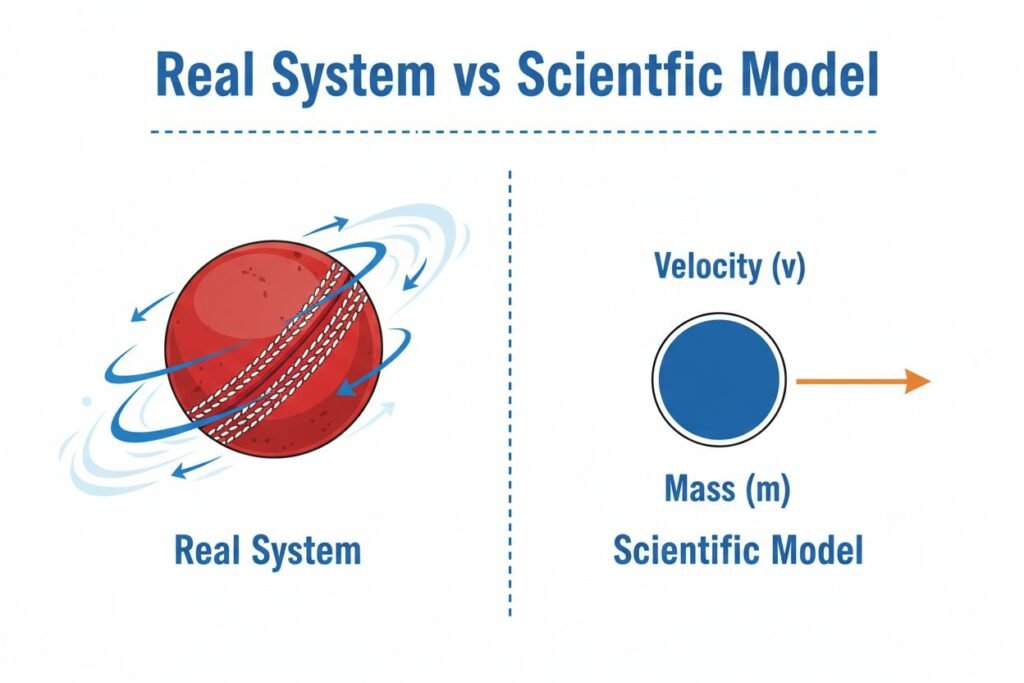
Example — Cricket Ball: Agar ball boundary cross karegi ya nahi? Toh bat ka brand? Ignore. Ball ka colour? Ignore. But ball ki mass, speed, direction? Yeh zaroori hai. Simple model mein air resistance bhi ignore kar sakte hain.
🗣️ 3. Science Ki Apni Bhasha Hai
Yeh interesting hai. Science mein kuch words ka matlab everyday life se alag hota hai.
Jaise — “force”, “work”, “cell”, “reaction” — yeh sab science mein specific meanings rakhte hain.
Isliye scientists poori duniya mein ek shared language use karte hain — symbols, units, aur terms. Jaise:
- Mass = m
- Velocity = v
- Force = F
- Electric current = I
Aur phir aata hai mathematics — jo is language ko aur precise banata hai.
➗ 4. Mathematics — Darr Nahi, Dost Hai
Honestly mujhe pehle equations se darr lagta tha. But yeh chapter ek alag perspective deta hai.
Equation sirf calculation tool nahi hai — yeh ek compact statement hai jo batata hai ki cheezein aapas mein kaise related hain.
Matlab aise samjho — distance, time, velocity se hum predict kar sakte hain ki object aage kahan hoga. Chemical reactions ki rate express kar sakte hain. Population growth ke patterns dekh sakte hain.
Toh equations yaad karne ki zaroorat nahi — situation samjho pehle, quantities identify karo, phir equation khud guide karegi.
⚖️ 5. Standard Units — Kyun Zaroori Hain?
Ek real incident tha — ek airplane mid-flight mein fuel khatam ho gaya. Kyun? Kyun ki ground crew ne fuel density pounds per litre mein calculate ki, kilograms per litre mein nahi. 15,000 litres kam tha fuel!
Isliye SI units — international standard units — use karna zaroori hai. Jab hum sabzi khareedte hain, ek kilogram matlab same hona chahiye har jagah. Warna confusion hi confusion.
📖 6. Laws, Theories, Principles — Inका Matlab Kya Hai?
Yeh teen terms confuse karte hain. Toh ek ek karke samjhte hain.
Law — nature mein jo regular pattern dikhta hai, usse describe karta hai. Jaise Newton’s laws of motion — bus achanak ruke toh jhatka kyun lagta hai.
Theory — yeh batata hai kyun woh pattern hota hai. Evidence ke basis pe. Jaise atomic theory — molecules kaise bante hain.
Principle — broad idea jo ek situation mein sense banata hai. Jaise conservation of energy — seedhiyan chadhte waqt.
Aur ek important baat — theory ka matlab guess nahi hota. Science mein theory matlab carefully tested explanation. Yeh hamesha open rehti hai improvement ke liye — nayi evidence aaye toh theory badal sakti hai. Yahi science ki strength hai.
🔮 7. Predictions — Science Ka Superpower
Maine socha… predictions toh sirf weather forecast mein hoti hain. But nahi!
Jab laws aur theories well-established ho jaati hain, toh hum anticipate kar sakte hain — experiment karne se pehle bhi.
- Football kitni door jayegi? → Motion ke ideas se predict kar sakte hain
- Kitna CO₂ banega? → Chemical reactions se
- Running mein breathing kaise badlegi? → Biology se
Yeh predictions guesses nahi hain — reasoned expectations hain, evidence pe based.
Aur jab prediction match nahi karti observation se? Toh scientists apne assumptions, models, measurements dobara check karte hain. Yahi exploration aage badhti hai.
Example — Varsha aur Barish: “Clouds dark hain toh barish hogi” — yeh scientific prediction nahi. Scientific hone ke liye chahiye — humidity kitni hai? Wind speed kya hai? Pichli baar kab barish hui thi, tab kya conditions thi? Measurable data chahiye.
🌦️ 8. Weather Forecast Galat Kyun Hota Hai?
Waise ek cheez aur — weather forecast reliable kyun nahi hota hamesha?
Kyun ki weather depend karta hai temperature, pressure, humidity, wind — bahut saari changing cheezein. Aur thodi si bhi difference in conditions time ke saath bahut bada effect create kar sakti hai. Isliye kuch ghanton ka forecast theek hota hai, lekin hafte baad ka? Not so much.
🧮 9. Estimation — Exact Answer Zaroori Nahi Hamesha
Yeh concept bahut useful hai practically.
Science mein exact values hamesha zaroori nahi — especially shuruaat mein. Rough estimate bhi kafi hoti hai yeh check karne ke liye ki answer reasonable hai ya nahi.
Example — Ek Din Mein Kitni Hawa Lete Hain?
- 1 minute mein ~12-15 breaths
- 1 din mein 1440 minutes → roughly 20,000 breaths
- Ek breath ~ 0.5 litre (balloon se estimate)
- Toh ~10,000 litres air per day!
Exact nahi, but reasonable. Yahi estimation ka kaam hai — intuition build karna, errors detect karna, confidence banana.
🔬 10. Science Ki Branches — Alag Hain Par Connected Hain
Class 9-10 mein chapters alag alag topics pe hain — physics, chemistry, biology, earth science. But yeh divisions sirf knowledge organize karne ke liye hain.
Real duniya mein? Sab connected hai.
- Climate change — physics + chemistry + biology + earth science sab chahiye
- Medicines — chemistry + biology
- COVID mask — physics (particle motion) + chemistry (polymer fibres) + biology (virus size) + maths (airflow modelling)
Aur science akeli nahi — maths, technology, arts, social sciences — sab milke sense banate hain duniya ka.
💡 11. Science — Sirf Facts Nahi, Ek Sochne Ka Tarika
Yeh last part mujhe sabse zyada pasand aaya.
Science sirf equations aur experiments ka collection nahi hai. Yeh ek human activity hai — curiosity se, creativity se, collaboration se, aur careful questioning se shaped.
Kai logon ne, kai cultures ne, kai generations ne milke science ko banaya hai. Aur yeh hamesha evolve hoti rehti hai.
Chahe aage science padho ya nahi — scientific thinking hamesha kaam aayegi. Technology samajhne mein, information critically evaluate karne mein, duniya ko samajhne mein.
Toh shuru karo — magnifying glass of evidence se dekho, compass of curiosity se direction lo.
Happy Exploring! 🚀
❓ Q&A — Chapter 1: Exploration
Q1. Science mein “model” kya hota hai?
Toh basically model ek simplified version hota hai real system ka. Hum sirf woh details rakhte hain jo us sawaal ke liye important hain, baaki ignore kar dete hain. Jaise cricket ball ki trajectory calculate karni ho toh bat ka brand matter nahi karta — ball ki mass aur speed matter karti hai.
Q2. Models mein details ignore karna galat hai kya?
Nahi! Yeh deliberately kiya jaata hai. Agar sab kuch include karo toh system itna complex ho jaata hai ki koi answer hi nahi milta. Simplification se focused answers milte hain.
Q3. Science mein “law” aur “theory” mein kya fark hai?
Law ek observed pattern describe karta hai — jaise Newton’s laws. Theory explain karti hai kyun woh pattern hota hai — jaise atomic theory. Theory ka matlab guess nahi hota, yeh carefully tested explanation hoti hai.
Q4. Standard units kyun zaroori hain?
Ek real example — ek airplane mid-flight fuel khatam ho gaya kyunki pounds aur kilograms mix ho gaye. Standard SI units use karne se aisi galtiyan nahi hoti aur results compare kiye ja sakte hain globally.
Q5. Scientific prediction aur guess mein kya fark hai?
Prediction evidence aur reasoning pe based hoti hai — measurable data, past patterns, established laws. Guess sirf opinion hota hai bina evidence ke. Jaise “clouds dark hain toh barish hogi” — yeh guess hai. Humidity, wind speed, temperature data se prediction hogi.
Q6. Estimation kyun important hai science mein?
Exact values hamesha possible nahi hoti. Rough estimate se hum check kar sakte hain ki answer reasonable hai ya nahi. Jaise ek din mein ~10,000 litres hawa lete hain — exact nahi but reasonable estimate hai.
Q7. Science ki alag branches kyun hain?
Sirf knowledge organize karne ke liye. Real duniya mein sab connected hai — COVID mask samajhne ke liye physics, chemistry, biology aur maths sab chahiye.
Q8. Theory kabhi change ho sakti hai kya?
Haan! Yahi science ki strength hai. Nayi evidence aane pe theories revise hoti hain. Koi bhi theory final nahi hoti — yeh hamesha open rehti hai questioning ke liye.
🔘 MCQs — Chapter 1
1. Science mein “model” ka main purpose kya hai?
- a) Exact reality copy karna
- b) ✅ Complex systems ko simplified way mein represent karna
- c) Sirf diagrams banana
- d) Experiments avoid karna
2. Cricket ball example mein simple model mein kya ignore kiya gaya?
- a) Ball ki mass
- b) Ball ki speed
- c) ✅ Air resistance aur ball ki spin
- d) Ball ki direction
3. Speed of light ka symbol ‘c’ kahan se aaya?
- a) English word “current” se
- b) ✅ Latin word “celeritas” se jiska matlab speed hai
- c) Scientist C. Newton ke naam se
- d) Chemical symbol Carbon se
4. Science mein “theory” ka sahi matlab kya hai?
- a) Ek random guess
- b) Sirf ek opinion
- c) ✅ Evidence pe based carefully tested explanation
- d) Ek proven final fact jo kabhi nahi badlega
5. Airplane fuel incident mein galti kya thi?
- a) Galat airplane use ki
- b) ✅ Pounds aur kilograms mix ho gaye fuel density calculate karte waqt
- c) Fuel tank leak tha
- d) Weather forecast galat tha
6. Ek din mein hum roughly kitni hawa lete hain?
- a) 1,000 litres
- b) 5,000 litres
- c) ✅ 10,000 litres
- d) 50,000 litres
7. Weather forecast zyada accurate kyun nahi hota future ke liye?
- a) Scientists lazy hote hain
- b) Computers slow hote hain
- c) ✅ Bahut saari changing conditions hoti hain jo time ke saath unpredictable ho jaati hain
- d) Weather ka koi pattern nahi hota
8. COVID mask ko samajhne ke liye kaunsi branches chahiye?
- a) Sirf biology
- b) Physics aur chemistry
- c) Biology aur maths
- d) ✅ Physics, chemistry, biology aur maths — sab
Shaping of the Earth’s Surface Class 9 Notes | Chapter 2
Understanding Social Science Class 9 Notes | Chapter 1
[…] Chapter 1 Exploration — Entering the World of Secondary Science […]