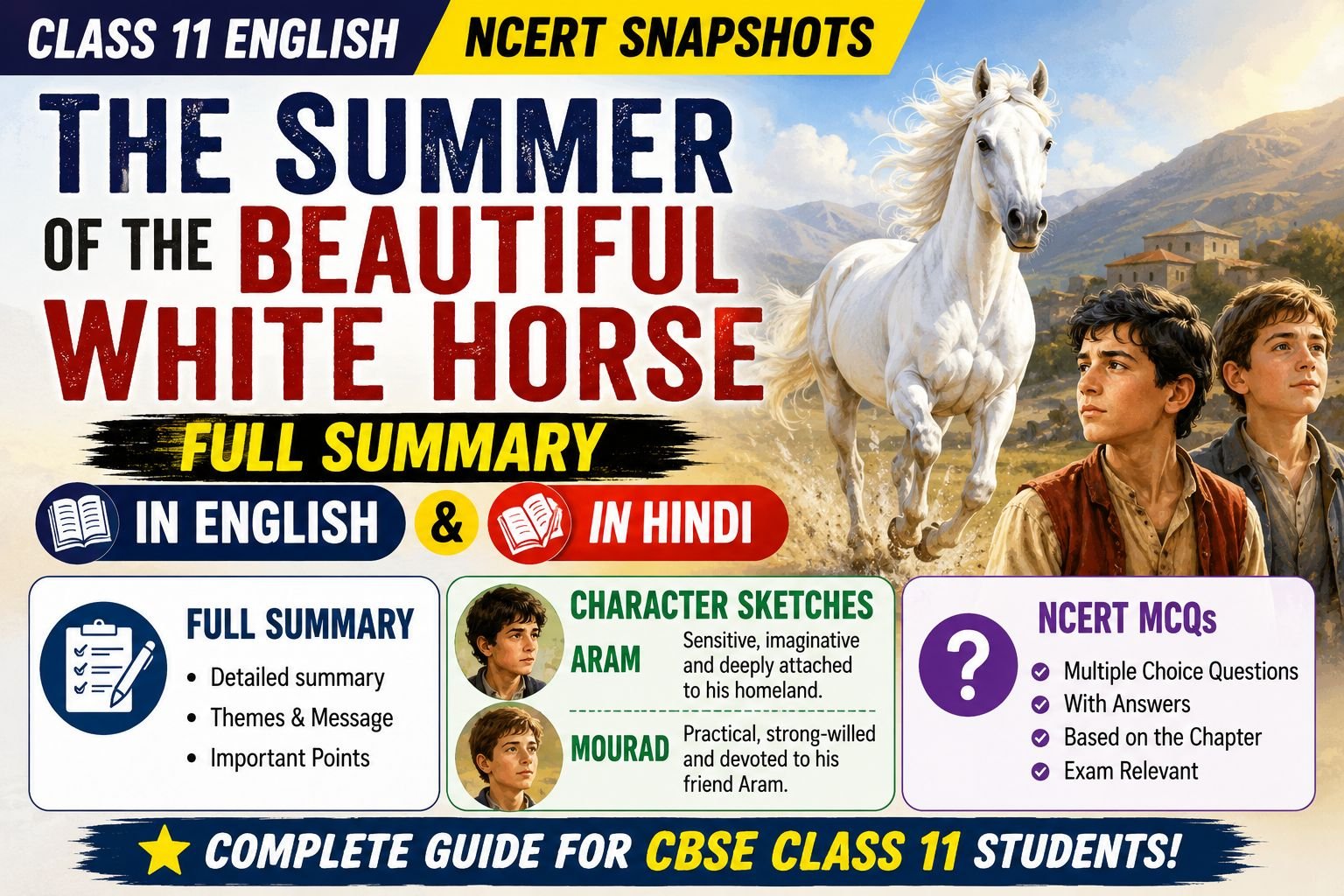
✍️ William Saroyan — Writer ka Parichay
Maine jab pehli baar William Saroyan ka naam suna, toh laga koi aam writer hoga. But honestly, jitna padha utna realize hua — yeh banda kuch alag hi tha.
William Saroyan ka janam 31 August 1908 ko hua — Fresno, California mein. Uske parents Armenian the, jo Armenia se America aaye the. Matlab ek immigrant family, naya desh, nai zindagi. Aur yahi background uski writing mein baar baar dikhta hai — outsider ka dard, belonging ki talash, aur phir bhi zindagi se pyaar.
Jab Saroyan sirf 3 saal ka tha, uske baap ka intaqal ho gaya. Sochte hain ek second — 3 saal ki umar mein baap chala jaaye. Uski maa ko kaam karna pada, aur Saroyan aur uske bhai-behenon ko orphanage mein rehna pada kuch saalon tak. Yeh experience — yeh tanha pan, yeh gareebi, yeh struggle — uski poori writing ki rooh ban gayi.
Padhne mein zyada formal education nahi thi uski. School chhod diya jaldi. Khud se padha, khud se seekha. Aur yahi self-taught nature uski writing mein ek raw honesty lekar aaya — jo textbook writers mein nahi milti.
Uski pehli badi kahani thi “The Daring Young Man on the Flying Trapeze” — 1934 mein publish hui. Ek hi raat mein likh di thi usne. Aur ek hi raat mein famous ho gaya. Literally. Publishers hairan, readers hairan.
Saroyan ki writing ka style? Matlab yaar, woh joy of life ko celebrate karta tha — even in poverty, even in sadness. Uske characters hamesha chhote log hote the — garib, immigrant, bacche, dreamers. Koi hero nahi, koi villain nahi. Bas insaan. Real insaan.
Uska sabse famous play tha “The Time of Your Life” — 1939 mein likha. Iske liye use Pulitzer Prize mila. But — aur yeh interesting part hai — usne Pulitzer lene se MANA kar diya. Bola ki commerce ko art judge karne ka haq nahi. Kitna bold move tha yaar.
Usne novels, plays, short stories, autobiographies — sab likha. “My Name is Aram” (1940) — yeh collection uski Armenian roots aur California childhood pe based hai. Aur isi collection se hai humari story — “The Summer of the Beautiful White Horse.”
Saroyan ki writing mein ek cheez jo mujhe personally bahut pasand hai — woh nostalgia hai. Ek aisi feeling jo kehti hai — bachpan mein sab kuch simple tha, beautiful tha, even when it wasn’t. Yeh illusion of innocence — yahi uski specialty thi.
William Saroyan ka intaqal 18 May 1981 ko hua — prostate cancer se. Marne se pehle usne khud apna obituary likha tha. Usne kaha: “Everybody has got to die, but I have always believed an exception would be made in my case. Now what?”
Yahi tha Saroyan — death ke saamne bhi humor. Zindagi ke saamne bhi wonder.
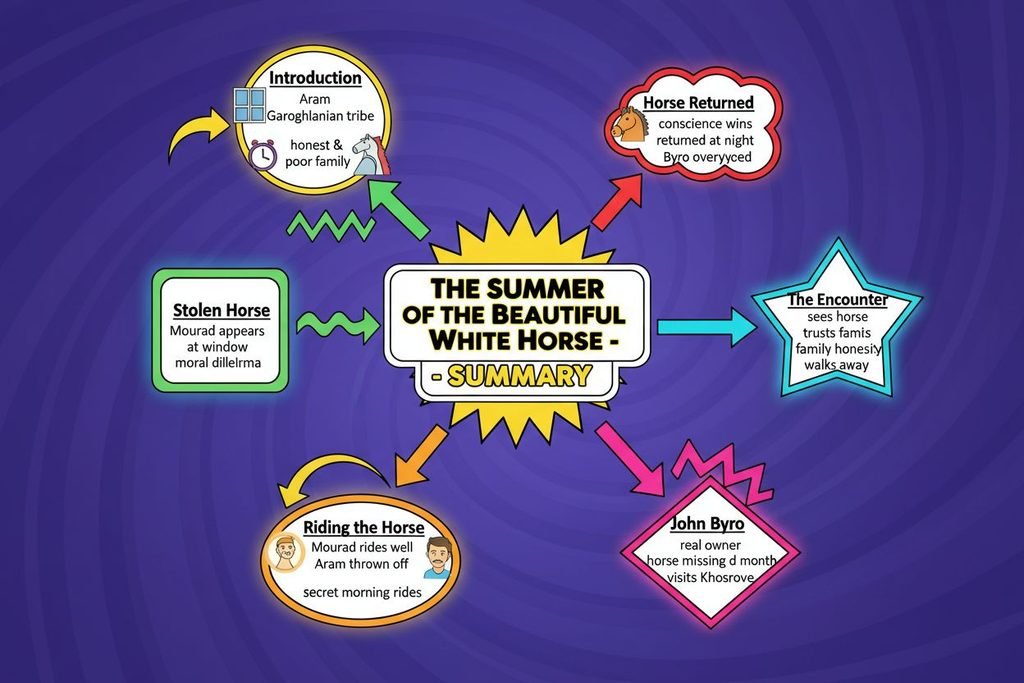
📖 Summary — The Summer of the Beautiful White Horse
🔹 1. Introduction / Parichay
English: The story opens with a young Armenian boy named Aram, who belongs to the Garoghlanian tribe — a family known for their honesty and poverty. One early morning, his cousin Mourad appears at his window with a beautiful white horse. Aram is shocked and excited at the same time, because owning a horse seemed impossible for their poor family.
Hindi: कहानी शुरू होती है एक छोटे अर्मेनियाई लड़के अराम से, जो गरोघलानियन ट्राइब का हिस्सा है — एक ऐसी फैमिली जो अपनी ईमानदारी और गरीबी दोनों के लिए मशहूर थी। एक सुबह सवेरे, उसका कज़िन मूराद एक खूबसूरत सफेद घोड़े के साथ उसकी खिड़की पे आता है। अराम हैरान भी है और खुश भी — क्योंकि इतने गरीब परिवार के लिए घोड़ा रखना तो सपने जैसी बात थी।
🔹 2. The Stolen Horse / Chori ka Ghoda
English: Aram quickly realizes that the horse must be stolen, because there was no way Mourad could have bought it. But he pushes this thought aside and decides to enjoy the moment. He convinces himself that riding a horse is not the same as stealing one — a classic case of a child’s moral juggling.
Hindi: अराम को जल्दी समझ आ जाता है कि घोड़ा ज़रूर चोरी का होगा, क्योंकि मूराद के पास इतने पैसे कहाँ। लेकिन वो इस सोच को एक तरफ रख देता है और moment enjoy करना चाहता है। वो खुद को convince करता है कि घोड़े पे बैठना और घोड़ा चुराना — दोनों अलग चीज़ें हैं। यह एक बच्चे की classic moral gymnastics है!
🔹 3. Riding the Horse / Ghode ki Sawari
English: Mourad rides the horse with great skill and joy. When Aram tries to ride, the horse throws him off and runs away. They eventually find the horse again. This continues for several weeks — they would secretly take the horse out every morning before anyone woke up, ride it, and return it to a barn.
Hindi: मूराद बहुत खूबसूरती से घोड़ा चलाता है। जब अराम try करता है, घोड़ा उसे गिरा देता है और भाग जाता है। वो फिर से घोड़ा ढूंढते हैं। यह सिलसिला काफी हफ्तों तक चलता है — हर सुबह छुप के घोड़ा निकालते, सवारी करते, और एक barn में वापस रख देते।
🔹 4. John Byro — The Owner / Malik ka Aana
English: One day, a farmer named John Byro visits Aram’s uncle Khosrove and complains that his white horse has been missing for over a month. Aram and Mourad overhear this conversation and feel uneasy. John Byro had paid a lot of money for the horse and was deeply troubled by its loss.
Hindi: एक दिन John Byro नाम का एक किसान अराम के चाचा Khosrove से मिलने आता है और बताता है कि उसका सफेद घोड़ा एक महीने से ज़्यादा से गायब है। अराम और मूराद यह बात सुन लेते हैं और uncomfortable feel करते हैं। John Byro ने घोड़े के लिए बहुत पैसा दिया था और वो बहुत परेशान था।
🔹 5. The Encounter / Seedhi Mulaqaat
English: Later, John Byro meets Aram and Mourad on the road while they are with the horse. He examines the horse carefully and says it looks exactly like his stolen horse — same eyes, same teeth. But because he knows the Garoghlanian family’s reputation for honesty, he says it must be a different horse and walks away.
Hindi: बाद में, John Byro अराम और मूराद से रास्ते में मिलता है जब वो घोड़े के साथ होते हैं। वो घोड़े को ध्यान से देखता है और कहता है यह बिल्कुल उसके चोरी हुए घोड़े जैसा लगता है — same आँखें, same दाँत। लेकिन गरोघलानियन फैमिली की ईमानदारी की reputation की वजह से वो कहता है यह कोई और घोड़ा होगा, और चला जाता है।
🔹 6. Return of the Horse / Ghoda Wapas Karna
English: After this encounter, Mourad decides it is time to return the horse. That very night, they quietly return the horse to John Byro’s barn. The next morning, John Byro comes running to Khosrove’s house, overjoyed, saying his horse has returned — and it looks even better than before!
Hindi: इस मुलाकात के बाद, मूराद decide करता है कि अब घोड़ा वापस करना चाहिए। उसी रात, वो दोनों छुप के घोड़ा John Byro के barn में वापस रख देते हैं। अगली सुबह, John Byro खुशी से भागता हुआ Khosrove के घर आता है और कहता है उसका घोड़ा वापस आ गया — और पहले से भी ज़्यादा healthy लगता है!
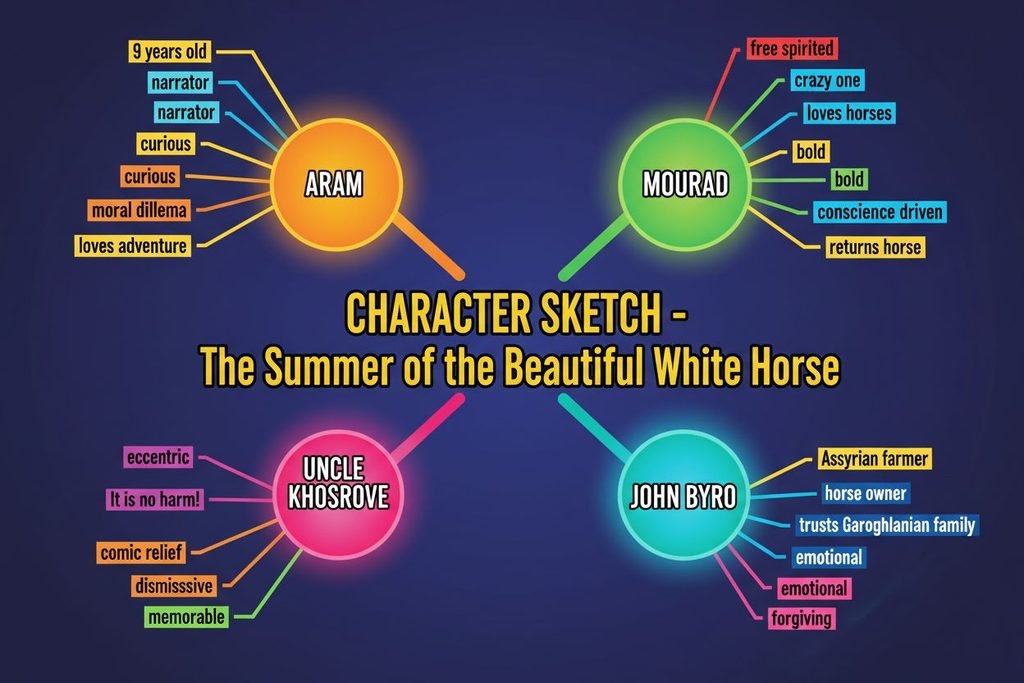
👤 Character Sketches / Paatra Parichay
🐴 Aram
Aram humara narrator hai — ek 9 saal ka sapne dekhne wala ladka. Woh honest family se hai, but jab ghode ki baat aati hai toh woh apni morality ko thoda “adjust” kar leta hai. Yahi uski sabse real quality hai — woh perfect nahi hai. Woh jaanta hai ghoda chori ka hai, but excitement uski common sense ko beat kar deti hai. Honestly mujhe laga yeh toh hum sab hi hain bachpan mein — jaante hain galat hai, phir bhi karte hain. Woh curious hai, adventurous hai, aur deeply family-oriented bhi.
🌟 Mourad
Mourad — yaar yeh character toh scene stealer hai. Woh Aram ka cousin hai aur family ka “crazy one” maana jaata hai. But actually woh crazy nahi — woh free spirited hai. Ghode se uska connection magical hai — woh ghode se baat karta hai, pyaar karta hai, aur ghoda bhi uski baat maanta hai. Mourad mein ek ajeeb confidence hai — woh rules tod sakta hai, but dil se bura nahi hai. Jab waqt aata hai, woh khud ghoda wapas karne ka decision leta hai. Yahi uski asli character hai.
🧔 Uncle Khosrove
Khosrove ek side character hai but bahut memorable. Uska ek hi dialogue hai basically — “It is no harm, pay no attention to it!” — chahe koi bhi problem ho. Ghar jal raha ho, ghoda chori ho — Khosrove kehta hai “koi baat nahi.” Woh comedy relief hai, but ek deeper message bhi deta hai — zindagi ki chhoti problems pe itna mat ro.
🌾 John Byro
John Byro ek Syrian farmer hai jo Armenian community mein rehta hai. Woh simple, honest aur emotional insaan hai. Uska ghode se emotional attachment dikhta hai. Aur jab woh Mourad ke paas ghoda dekhta hai aur phir bhi “yeh alag ghoda hai” kehta hai — yeh moment bahut powerful hai. Woh Garoghlanian family ki imaandari pe itna trust karta hai ki apni aankhon ko jhuthlaa deta hai. Yeh trust — yahi is kahani ka core message hai.
❓ NCERT Questions — The Summer of the Beautiful White Horse
Q1. What makes the story interesting despite no breathless adventure?
Honestly, jab maine pehli baar yeh question padha toh socha — sach mein toh koi bada action nahi hai is kahani mein. Na koi chase scene, na koi fight. Phir bhi kahani padhte waqt rukne ka mann nahi karta. Kyun?
Because the real adventure here is moral and emotional, not physical.
The interesting elements are:
- Irony — A family famous for honesty has boys who ride a stolen horse. Yeh contradiction hi reader ko baandhe rakhta hai.
- Mourad’s personality — Woh itna unpredictable aur free-spirited hai ki har scene mein kuch naya expect hota hai.
- John Byro’s trust — Woh ghoda dekhta hai, jaanta hai, phir bhi maanta nahi. Yeh moment emotionally very powerful hai.
- Childhood innocence — Aram ki moral juggling — “riding is not stealing” — yeh sab readers ko apna bachpan yaad dilata hai.
- Saroyan ki language — Nostalgic, warm, poetic. Padhna khud mein ek experience hai.
Matlab simple baat hai yaar — real life mein bhi sabse interesting cheezein woh hoti hain jo andar se hoti hain, bahar se nahi.
हिंदी
सच में जब यह सवाल पढ़ा तो लगा — कोई बड़ा action नहीं है इस कहानी में। न chase, न fight। फिर भी कहानी छोड़ने का मन नहीं करता। क्यों?
क्योंकि असली adventure यहाँ moral और emotional है, physical नहीं।
- विडंबना (Irony) — ईमानदारी के लिए मशहूर परिवार के लड़के चोरी के घोड़े पर सवारी करते हैं। यही contradiction reader को बाँधे रखता है।
- मूराद की personality — वो इतना unpredictable है कि हर scene में कुछ नया लगता है।
- John Byro का भरोसा — वो घोड़ा देखता है, पहचानता है, फिर भी मानता नहीं। यह moment बहुत powerful है।
- बचपन की मासूमियत — अराम की moral juggling पढ़कर अपना बचपन याद आ जाता है।
- Saroyan की भाषा — Nostalgic, warm, poetic। पढ़ना खुद में एक experience है।
Q2. Did the boys return the horse out of conscience or fear?
This is actually a debatable question — and that’s what makes it fun.
My opinion? It was mostly conscience, not fear.
Here’s why:
- John Byro already saw the horse and chose to ignore it. So there was no immediate danger or fear of getting caught.
- Mourad himself decided to return the horse — nobody forced him.
- The fact that they returned it at night, quietly, without telling anyone — shows it was a personal moral decision.
- But yes, John Byro’s visit triggered their conscience. Seeing the real owner’s pain made them feel guilty.
So the honest answer is — John Byro’s sadness awakened their conscience, and conscience made them return the horse. Fear had little role.
Waise ek cheez aur — Mourad ne ghode ko itne pyaar se rakha, train kiya. Woh ghode ka bura nahi chahta tha. Returning the horse was also an act of love for the horse itself.
हिंदी
यह सवाल actually debatable है — और यही इसे interesting बनाता है।
मेरी राय? यह ज़्यादातर ज़मीर (conscience) की वजह से था, डर से नहीं।
क्यों?
- John Byro ने घोड़ा देख लिया था और ignore किया। तो पकड़े जाने का डर तो था नहीं।
- मूराद ने खुद decide किया घोड़ा वापस करने का — किसी ने force नहीं किया।
- रात को चुपचाप वापस करना — यह एक personal moral decision था।
- लेकिन हाँ, John Byro की visit ने उनके ज़मीर को जगाया। असली मालिक का दर्द देखकर guilt आया।
तो सच यह है — John Byro के दुख ने ज़मीर जगाया, और ज़मीर ने घोड़ा वापस करवाया। डर का role बहुत कम था।
Q3. Nostalgia — An Incident from Childhood
(Written in student voice — as if a student is narrating)
“One day back there in the good old days…” — jab yeh line padhi, toh honestly mujhe apna woh din yaad aa gaya jab main chhota tha aur humari colony mein ek purana, abandoned scooter pada tha.
Hum teen dost the. Humne socha — ek baar chalake dekhte hain. Kisi ko pata nahi chalega. Scooter start nahi hua, but hum dhakka deke chalaate rahe. Ek dost baith gaya, doosre ne dhakka diya, teesre ne “vroom vroom” ki awaaz nikali.
Woh scooter 10 meter bhi nahi gaya — seedha nali mein gir gaya.
Hum teeno bhaage. Ghar aake chup baith gaye. Kisi ne kuch nahi bola. Koi puchhe toh “main toh ghar pe tha” wali acting.
Aaj sochta hoon toh hassi aati hai. Tab laga tha duniya khatam ho gayi. But woh din — woh excitement, woh dar, woh dosti — sab kuch ek saath tha. Yahi toh bachpan hai.
हिंदी
“One day back there in the good old days…” — जब यह line पढ़ी, तो मुझे अपना वो दिन याद आ गया जब हमारी colony में एक पुराना, abandoned scooter पड़ा था।
हम तीन दोस्त थे। सोचा — एक बार चलाके देखते हैं। किसी को पता नहीं चलेगा। Scooter start नहीं हुआ, लेकिन हम धक्का देके चलाते रहे। एक दोस्त बैठ गया, दूसरे ने धक्का दिया, तीसरे ने “vroom vroom” की आवाज़ निकाली।
वो scooter 10 meter भी नहीं गया — सीधा नाली में गिर गया।
हम तीनों भागे। घर आके चुप बैठ गए। कोई पूछे तो “मैं तो घर पे था” वाली acting।
आज सोचता हूँ तो हँसी आती है। तब लगा था दुनिया खत्म हो गई। लेकिन वो दिन — वो excitement, वो डर, वो दोस्ती — सब कुछ एक साथ था। यही तो बचपन है।
Q4. Armenia, Assyria & The Garoghlanian Tribe
📍 Armenia: Armenia is a small landlocked country in the South Caucasus region of Eurasia. It is bordered by Turkey, Georgia, Azerbaijan, and Iran. Its capital is Yerevan. Armenia is one of the world’s oldest civilizations and was the first country to adopt Christianity as a state religion (301 AD). Armenians have a rich cultural heritage — music, art, literature, and a unique alphabet.
📍 Assyria: Assyria was an ancient civilization located in the northern part of Mesopotamia — present-day northern Iraq, parts of Syria, Turkey, and Iran. The Assyrian people are one of the oldest ethnic groups in the world. In the story, John Byro is described as an Assyrian — showing the multicultural nature of the Armenian immigrant community in America.
👨👩👧 The Garoghlanian Tribe:
- Origin: Armenian tribe, immigrants settled in Fresno, California
- Key Trait: Absolute, uncompromising honesty — their most prized value, passed down for generations
- Economic Status: Extremely poor — “proud and poverty-stricken”
- Names: Armenian names like Aram, Mourad, Khosrove — reflecting their cultural roots
- Nature: Warm, emotional, slightly eccentric (like Uncle Khosrove), deeply family-oriented
- Values: Honor, trust, community reputation — more important than material wealth
- Unique quality: Even in poverty, they maintained dignity and moral integrity
The tribe represents the immigrant experience — holding onto cultural identity and values even in a foreign land.
हिंदी
📍 आर्मेनिया: आर्मेनिया यूरेशिया के South Caucasus क्षेत्र में एक छोटा landlocked देश है। इसकी राजधानी येरेवान है। आर्मेनिया दुनिया की सबसे पुरानी सभ्यताओं में से एक है और ईसाई धर्म अपनाने वाला पहला देश था (301 AD)। आर्मेनियाई लोगों की संस्कृति बहुत समृद्ध है — संगीत, कला, साहित्य और एक अनोखी लिपि।
📍 असीरिया: असीरिया एक प्राचीन सभ्यता थी जो मेसोपोटामिया के उत्तरी भाग में थी — आज का उत्तरी इराक, सीरिया, तुर्की और ईरान के कुछ हिस्से। कहानी में John Byro एक Assyrian है — जो अमेरिका में Armenian immigrant community की multicultural nature दिखाता है।
👨👩👧 गरोघलानियन ट्राइब:
- मूल: अर्मेनियाई जनजाति, Fresno, California में बसे immigrants
- मुख्य गुण: पूर्ण, अटल ईमानदारी — पीढ़ियों से चली आ रही सबसे बड़ी पहचान
- आर्थिक स्थिति: बेहद गरीब — “गर्वीले और गरीब”
- नाम: अराम, मूराद, खोसरोव — अर्मेनियाई सांस्कृतिक जड़ों को दर्शाते हैं
- स्वभाव: गर्मजोशी से भरे, भावुक, थोड़े eccentric (जैसे चाचा Khosrove), परिवार को सर्वोपरि मानने वाले
- मूल्य: सम्मान, विश्वास, community की reputation — भौतिक संपत्ति से ज़्यादा ज़रूरी
- खास बात: गरीबी में भी dignity और moral integrity बनाए रखी
यह जनजाति immigrant experience को represent करती है — विदेशी ज़मीन पर भी अपनी सांस्कृतिक पहचान और मूल्यों को थामे रखना।
🎨 Try This Out — Draw the Horse Scene
“The horse stood on its hind legs, snorted, and burst into a fury of speed that was the loveliest thing I had ever seen.”
Yeh scene draw karne ke liye imagine karo:
- एक सफेद घोड़ा — पिछली टाँगों पर खड़ा, अगली टाँगें हवा में
- नथुने फूले हुए, साँस की भाप निकल रही है सुबह की ठंडी हवा में
- पीछे सुनहरी सुबह की रोशनी — sunrise का background
- घोड़े की अयाल (mane) हवा में उड़ रही है
- ज़मीन पर धूल उड़ रही है speed की वजह से
- दूर खड़ा मूराद — हैरान और खुश दोनों
Pencil sketch mein pehle outline banao, phir shading se movement dikhao। यह scene truly artist’s delight है! 🎨
MCQs — The Summer of the Beautiful White Horse
Class 11 | Snapshots | Chapter 1
Q1. The story “The Summer of the Beautiful White Horse” is written by —
- A) R.K. Narayan
- B) William Saroyan ✅
- C) Ruskin Bond
- D) O. Henry
Q2. Aram and Mourad belong to which tribe?
- A) Assyrian tribe
- B) Syrian tribe
- C) Garoghlanian tribe ✅
- D) Armenian Royal tribe
Q3. The Garoghlanian family was known for —
- A) Their wealth and power
- B) Their honesty and poverty ✅
- C) Their horses and farms
- D) Their bravery in wars
Q4. How did Mourad get the white horse?
- A) He bought it from a farmer
- B) His uncle gifted it
- C) He stole it ✅
- D) He found it wandering
Q5. When Aram tried to ride the horse, what happened?
- A) He rode it successfully
- B) The horse fell down
- C) The horse threw him off and ran away ✅
- D) Mourad stopped him
Q6. Who was the real owner of the white horse?
- A) Uncle Khosrove
- B) John Byro ✅
- C) Aram’s father
- D) A Syrian merchant
Q7. John Byro’s nationality in the story is —
- A) Armenian
- B) American
- C) Assyrian ✅
- D) Syrian
Q8. When John Byro saw the horse with the boys, he said —
- A) “That is my stolen horse!”
- B) “I will call the police!”
- C) “It looks exactly like my horse but it cannot be, because of your family’s honesty” ✅
- D) “Where did you find this horse?”
Q9. Uncle Khosrove’s famous repeated line in the story is —
- A) “Boys will be boys!”
- B) “It is no harm, pay no attention to it!” ✅
- C) “We must return what is not ours!”
- D) “Life is full of mystery!”
Q10. Why did the boys finally return the horse?
- A) They were caught by the police
- B) The horse was injured
- C) Their conscience was awakened after meeting John Byro ✅
- D) Uncle Khosrove ordered them
Miyan Nasiruddin, Summary, Class 11 Hindi NCERT
The Summer of the Beautiful White Horse Summary, Class 11
[…] The Summer of the Beautiful White Horse Summary, Class 11 Snapshots Chapter 1Some Basic Concepts of Chemistry Class 11: Complete Notes | NCERT Chapter 1 […]