Class 9 | NCERT Science | Heading-wise Notes
🌊 1. Life Ki Shuruaat — Paani Se
Toh basically… scientists maante hain ki life ki shuruaat paani mein hui thi. Oceans mein nahi, balki chhote chhote water pools mein — jahan conditions baar baar badlti thi.
India mein Puga Valley, Ladakh ke hot springs ek aisa hi example hain. Bahut zyada temperature, thanda mahaul — aur phir bhi wahan thermophiles naam ke heat-loving bacteria milte hain. Scientists ka kehna hai yeh conditions early Earth jaisi hain — karib 3.5 billion saal pehle ki.
Wahan calcium carbonate ke deposits bante the jo shayad pehle organic molecules ko radiation se bachate the. Aur yahi se pehli cell membrane bani hogi.
🔬 2. Cell Kya Hai — Zindagi Ki Sabse Chhoti Unit
Sabse simple baat — cell = life ki basic unit.
- Kuch organisms sirf ek cell se bane hote hain — jaise bacteria, yeast → unicellular
- Kuch organisms mein millions of cells hote hain — jaise plants, fish, humans → multicellular
Aur yeh cells milke tissues banate hain → tissues se organs → organs se organ systems. Jaise nasal cavity + trachea + lungs = respiratory system.
👁️ 3. Cell Ko Kaise Dekhen — Microscope Ki Zaroorat Kyun?
Mujhe pehle samajh nahi aaya tha ki aankhon se cell kyun nahi dikhta. Toh basically…
Human eye ka limit of resolution = 0.1 mm hota hai. Matlab isse chhoti cheez alag alag nahi dikhti. Cell isse bhi chhota hota hai!
Isliye microscope chahiye.
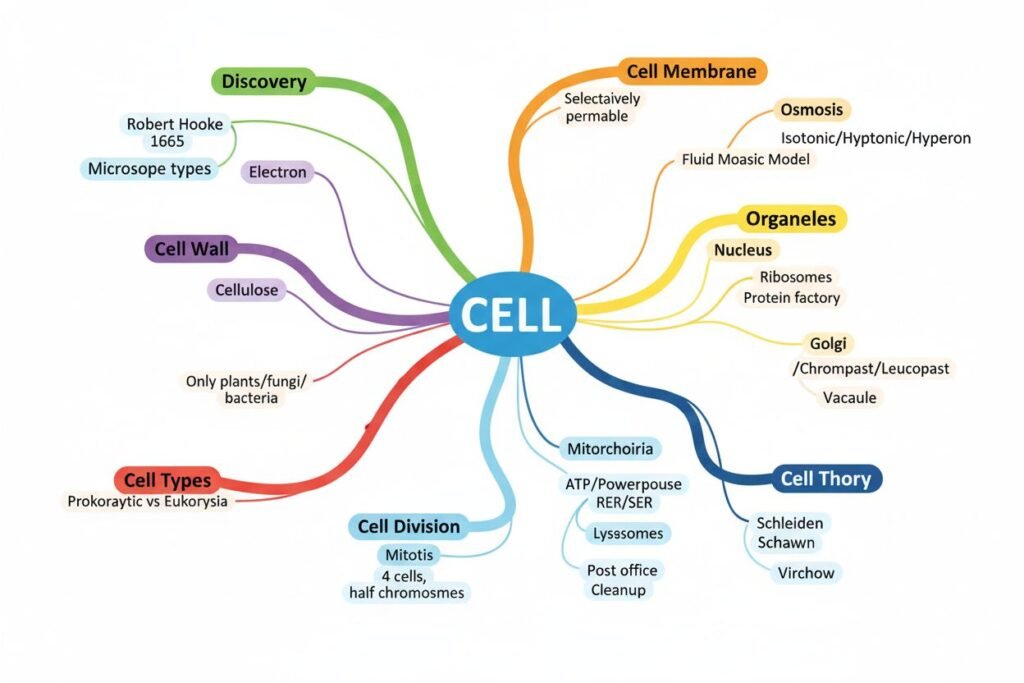
Robert Hooke ne 1665 mein pehli baar cell dekha — cork ki얇i slice mein — aur unhe “cells” naam diya kyunki woh chhote chhote box jaisi compartments thi.
Microscope ke types:
- Light Microscope — school labs mein use hota hai, 10X, 40X lenses
- Electron Microscope — light ki jagah electrons use karta hai, nanometre scale tak detail dikhata hai — bahut powerful!
Cell size estimate kaise karein? Formula simple hai:
Cell size = Field of view diameter (µm) ÷ Number of cells along diameter
Jaise 5000 µm field mein 25 cells hain → ek cell = 200 µm
🧱 4. Cell Membrane — Har Cell Ki Universal Boundary
Yeh wala concept bahut important hai.
Cell membrane ek patli boundary hai jo cell ko protect karti hai. Isko plasma membrane bhi kehte hain.
Yeh selectively permeable hoti hai — matlab kuch cheezein andar jaane deti hai, kuch nahi.
Osmosis kya hai? Paani ka selectively permeable membrane se move karna = osmosis.
Potato experiment se samjho:
- Plain water mein rakha → potato fools (paani andar gaya)
- Salt solution mein rakha → potato shrinks (paani bahar nikla)
Paani hamesha dilute → concentrated ki taraf move karta hai.
Teen types of solutions:
- Isotonic — andar bahar concentration same → koi change nahi
- Hypotonic — bahar kam concentration → paani cell mein ghusega → cell phoolega
- Hypertonic — bahar zyada concentration → paani bahar jayega → cell shrinkage
Cell membrane ki structure — Fluid Mosaic Model:
- Lipid bilayer — do layers of fat molecules, heads bahar, tails andar
- Proteins — gatekeepers ki tarah, substances pass karne mein help karte hain
- Molecules move kar sakte hain → isliye “fluid”
- Mosaic tiles jaisi arrangement → isliye “mosaic”
🌿 5. Cell Wall — Sirf Plants, Fungi aur Bacteria Mein
Animal cells mein cell wall nahi hoti. Plants mein hoti hai — kyunki plants move nahi kar sakte, toh unhe rigid structure chahiye wind aur rain se bachne ke liye.
Cell wall permeable hoti hai — paani aur minerals pass kar sakte hain.
Cell wall ki material: mainly cellulose — jo glucose units se bani hoti hai. Yahi cellulose hamare diet mein roughage ka kaam karta hai.
Jab plant cell concentrated solution mein rakhi jaaye → paani bahar nikalta hai → inner content shrinks → cell membrane cell wall se alag ho jaati hai. Lekin cell wall rigid hone ki wajah se cell ka size same rehta hai.
Animal cell mein cell wall nahi → woh freely shape change kar sakti hai → isliye animal tissues flexible hote hain.
⚙️ 6. Cell Ke Andar — Ek Poori Factory
Har eukaryotic cell ke teen basic parts hote hain:
- Plasma membrane
- Cytoplasm — jelly jaisa semi-fluid substance
- Nucleus
Aur cytoplasm mein hote hain organelles — chhote chhote specialized structures.
🦠 7. Prokaryotic vs Eukaryotic Cells
| Feature | Prokaryotic | Eukaryotic |
|---|---|---|
| Nucleus | Nahi (nucleoid hota hai) | Haan, well-defined |
| Size | 1–10 µm | 10–100 µm |
| Organelles | Nahi | Haan |
| Example | Bacteria | Plants, Animals |
🧬 8. Nucleus — Coded Instructions Ka Ghar
Nucleus cell ka control center hai.
- Nuclear membrane — double layer, pores ke saath (material transfer ke liye)
- Nucleolus — ribosomal subunits yahan bante hain
- Chromosomes — DNA + proteins se bane, sirf cell division ke time dikhte hain
- DNA — genetic information store karta hai
- Genes — DNA ke functional segments
Non-dividing cell mein DNA chromatin material ke roop mein hota hai — entangled threads jaisa. Division ke time yeh chromosomes ban jaata hai.
Interesting fact — mature RBCs mein nucleus nahi hota! Isliye zyada haemoglobin fit hota hai → zyada oxygen transport. But yahi wajah hai ki woh sirf ~120 din jeete hain.
🏭 9. Cell Organelles — Har Ek Ka Apna Kaam
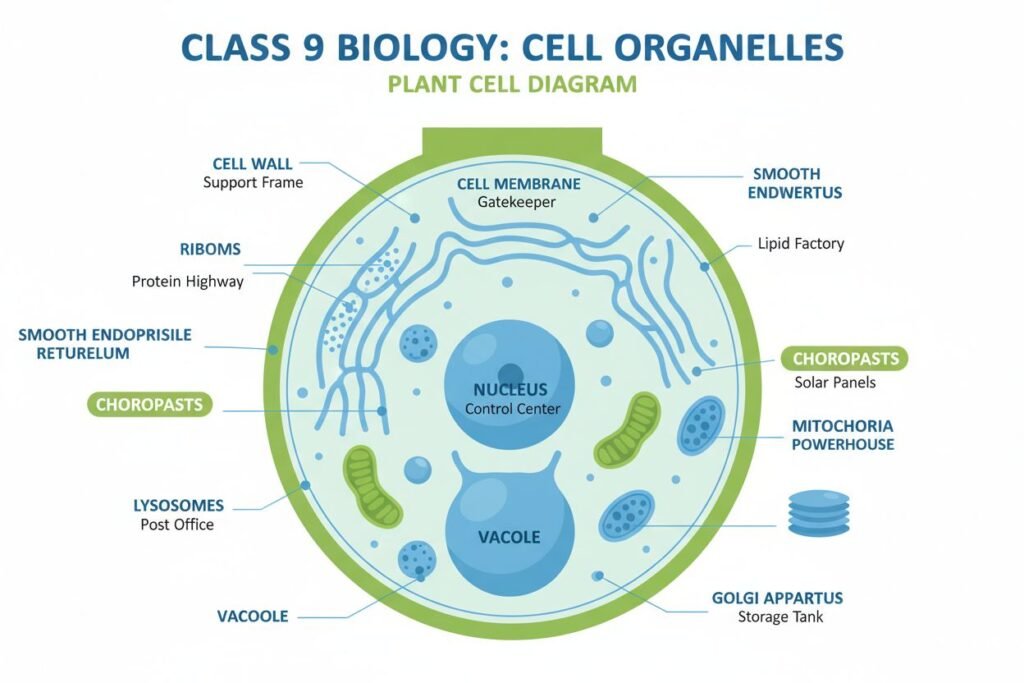
Ribosomes — Protein Factory
- Cytoplasm mein freely ya ER se attached
- Protein synthesis yahan hoti hai
Endoplasmic Reticulum (ER) — Manufacturing Network
- Nucleus se connected, poore cytoplasm mein failaa hua
- Do types:
- RER (Rough ER) — ribosomes attached, protein synthesis + secretion
- SER (Smooth ER) — ribosomes nahi, fats + hormones synthesis
Golgi Apparatus — Post Office of Cell -납작e sac-like structures ka stack
- Proteins aur lipids ko modify, sort, aur package karta hai
- Vesicles mein pack karke transport karta hai
Lysosomes — Clean-up Crew
- Enzymes se bhare single membrane sacs
- Damaged proteins, fats, organelles ko break down karte hain
- Products cytoplasm mein reuse hote hain
- Fun fact — sperm cells mein lysosomal enzymes hote hain jo egg ki outer layer tod ke fertilisation mein help karte hain!
Mitochondria — Powerhouse of the Cell
- Double membrane — outer smooth, inner folded (cristae)
- Cristae surface area badhate hain → zyada energy production
- Glucose break down → ATP (energy currency) banta hai
- Apna khud ka DNA aur ribosomes hote hain → bacteria se evolutionary connection!
🌱 10. Plastids — Sirf Plant Cells Mein
Plants khud khana banate hain → isliye unhe special organelles chahiye.
Teen types of plastids:
- Chloroplasts — green pigment chlorophyll hota hai, photosynthesis hoti hai
- Double membrane, andar stroma (semi-fluid)
- Sugars aur starch yahan store hote hain
- Apna DNA aur ribosomes hote hain
- Chromoplasts — yellow, orange, red pigments
- Flowers aur fruits ko bright colours dete hain
- Pollinators aur seed dispersers attract karte hain
- Leucoplasts — colourless, food storage
- Starch, oils, proteins store karte hain
- Potato aur taro mein starch store hota hai
💧 11. Vacuoles — Storage Tank
Plant cells mein — ek bada central vacuole hota hai, cell sap se bhara hua. Paani, minerals, sugars, waste store karta hai. Pressure maintain karta hai → plant firm rehti hai.
Jab paani nahi milta → vacuole shrinks → plant wilted ho jaati hai.
Animal cells mein — vacuoles hote hain but chhote, temporary storage ke liye.
🔄 12. Cell Division — Naye Cells Kaise Bante Hain
Skin cut ho → heal ho jaati hai. Baal girte hain → naye aate hain. Yeh sab cell division ki wajah se hota hai.
Do major types:
Mitosis:
- Normal growth, repair, maintenance ke liye
- 1 parent cell → 2 identical daughter cells
- Same DNA, same chromosomes
- Body cells mein hoti hai
Meiosis:
- Sirf reproductive organs mein
- 1 parent cell → 4 daughter cells with half chromosomes
- Do divisions hoti hain
- Gametes (sperm + egg) banate hain
- Fertilisation pe chromosome number restore ho jaata hai
- Genetic diversity create karta hai → isliye bacche parents jaise hote hain but exactly same nahi
Errors in division:
- Mitosis error → uncontrolled division → tumours, cancer
- Meiosis error → genetic disorders, pregnancy loss, infertility
📜 13. Cell Theory — Biology Ka Unifying Principle
Teen scientists, teen discoveries:
- Matthias Schleiden (1838) — sabhi plants cells se bane hain
- Theodor Schwann (1839) — sabhi animals bhi cells se bane hain
- Rudolf Virchow (1855) — naye cells sirf pre-existing cells se bante hain
Cell Theory ke teen points:
- Sabhi living organisms ek ya zyada cells se bane hain
- Cell structure aur function ki basic unit hai
- Sabhi cells pre-existing cells se aate hain
☠️ 14. Cells Ka Life Span — Hamesha Nahi Jeete
Cells grow karte hain, divide karte hain, kaam karte hain, aur naturally mar jaate hain.
Contact inhibition — jab animal cells neighbouring cells se touch karte hain toh division ruk jaati hai.
Cancer cells — yeh control kho dete hain → uncontrollably divide karte rehte hain → tumours bante hain.
Programmed Cell Death (PCD) — genetically controlled death. Jaise embryo development mein fingers ke beech ki cells mar jaati hain → warna haath webbed hote!
Plant cells mein cell wall ki wajah se contact inhibition nahi hoti — alag pattern of growth follow karte hain.
❓ Q&A — Chapter 2: Cell
Q1. Life ki shuruaat kahan hui mani jaati hai?
Paani mein — specifically chhote water pools mein jahan conditions baar baar badlti thi. Puga Valley, Ladakh ke hot springs aise hi environment ka example hain jo early Earth jaisi conditions rakhte hain.
Q2. Cell membrane “selectively permeable” kyun kehlaati hai?
Kyunki yeh sirf kuch cheezein andar jaane deti hai, baaki block kar deti hai. Jaise paani pass kar sakta hai but sugar ya salt molecules nahi.
Q3. Osmosis aur diffusion mein kya fark hai?
Diffusion = particles ka high concentration se low concentration ki taraf move karna — bina membrane ke bhi hota hai. Osmosis = specifically paani ka selectively permeable membrane se move karna.
Q4. Plant cell mein cell wall kyun hoti hai, animal cell mein kyun nahi?
Plants ek jagah fixed rehte hain — unhe wind, rain se bachne ke liye rigid structure chahiye. Animals move karte hain — unhe flexible cells chahiye. Isliye animal cells mein cell wall nahi hoti.
Q5. Prokaryotic aur eukaryotic cells mein main difference kya hai?
Prokaryotic mein well-defined nucleus nahi hota — genetic material nucleoid mein hota hai, koi membrane-bound organelles nahi. Eukaryotic mein proper nucleus hota hai aur saare organelles hote hain.
Q6. Mitochondria ko “powerhouse of the cell” kyun kehte hain?
Kyunki yahan glucose break down hokar ATP banta hai — jo cell ki energy currency hai. Cristae (inner membrane folds) surface area badhate hain taaki zyada energy produce ho sake.
Q7. Mitosis aur meiosis mein kya fark hai?
Mitosis → 1 cell se 2 identical cells → body growth aur repair ke liye. Meiosis → 1 cell se 4 cells with half chromosomes → gametes banane ke liye, genetic diversity ke liye.
Q8. Cell Theory kya hai aur kisne diya?
Teen scientists ne milke diya — Schleiden (1838), Schwann (1839), Virchow (1855). Teen points: sabhi organisms cells se bane hain, cell basic unit hai, naye cells sirf pre-existing cells se bante hain.
Q9. Cancer cells normal cells se alag kyun hote hain?
Normal cells contact inhibition follow karte hain — neighbouring cells se touch hone pe division ruk jaati hai. Cancer cells yeh control kho dete hain → uncontrollably divide karte rehte hain → tumours bante hain.
Q10. Golgi apparatus ka kya kaam hai?
Cell ka post office — proteins aur lipids ko modify, sort aur package karta hai vesicles mein, phir transport ya secretion ke liye bhejta hai.
🔘 MCQs — Chapter 2
1. Cell ki discovery kisne ki?
- a) Theodor Schwann
- b) Rudolf Virchow
- c) ✅ Robert Hooke
- d) Matthias Schleiden
2. Human eye ka limit of resolution kya hai?
- a) 1 mm
- b) 0.01 mm
- c) ✅ 0.1 mm
- d) 10 mm
3. Osmosis mein paani kis direction mein move karta hai?
- a) Concentrated → Dilute
- b) ✅ Dilute → Concentrated
- c) Dono directions mein equally
- d) Koi movement nahi hoti
4. Cell wall mainly kis cheez se bani hoti hai plants mein?
- a) Protein
- b) Lipid
- c) Starch
- d) ✅ Cellulose
5. Ribosomes ka main kaam kya hai?
- a) Energy production
- b) ✅ Protein synthesis
- c) Fat storage
- d) Cell division
6. Mitochondria ki inner membrane ke folds ko kya kehte hain?
- a) Stroma
- b) Nucleoid
- c) ✅ Cristae
- d) Chromatin
7. Meiosis se kitni daughter cells banti hain?
- a) 2
- b) 3
- c) ✅ 4
- d) 8
8. Flowers aur fruits ko bright colours kaunse plastids dete hain?
- a) Leucoplasts
- b) Chloroplasts
- c) ✅ Chromoplasts
- d) Ribosomes
9. Hypertonic solution mein cell ka kya hoga?
- a) Phool jayega
- b) Koi change nahi
- c) ✅ Shrink ho jayega
- d) Divide ho jayega
10. Cell Theory mein Rudolf Virchow ka contribution kya tha?
- a) Plants cells se bane hain
- b) Animals cells se bane hain
- c) ✅ Naye cells sirf pre-existing cells se bante hain
- d) Cell membrane selectively permeable hoti hai